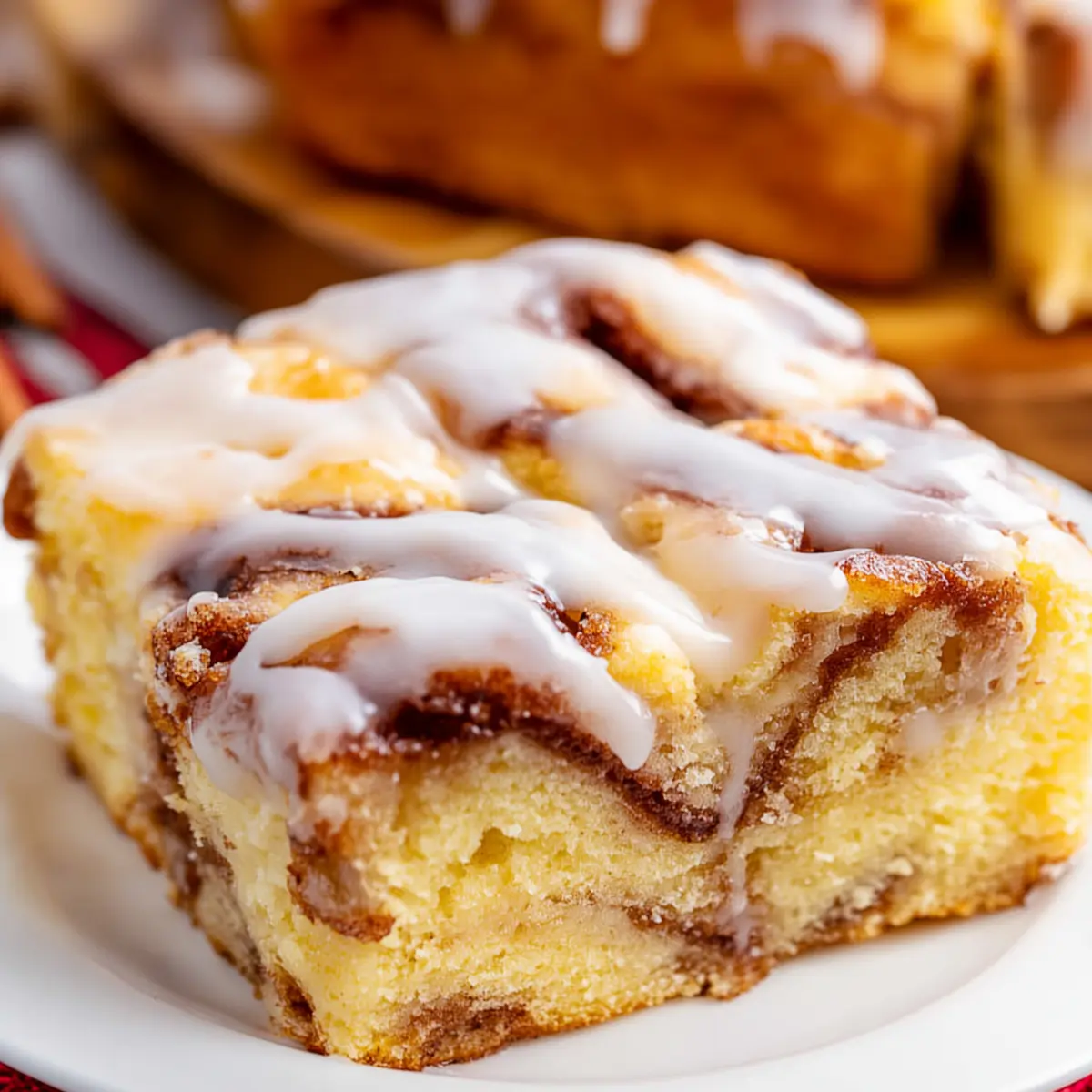
The moment you slide a pan of cinnamon roll cake into the oven, your kitchen fills with that swirling, incredibly warm cinnamon scent. It’s the kind of aroma that makes everyone sneak a peek at what’s baking—even the most patient can’t resist. What I love about this cinnamon roll cake is how it wraps up everything you crave from classic cinnamon rolls—sweetness, spice, buttery richness—but without any rolling, rising, or yeast. Just soft, tender layers of cake, bold cinnamon sugar swirls, and plenty of creamy vanilla glaze melting into every fold. It’s a family favorite for lazy brunches, holiday spreads, or just because you want a bite of comfort on a regular Tuesday.
What Makes This Cinnamon Roll Cake So Addictive
There’s something so satisfying about a cinnamon roll, but honestly, I rarely have the patience for yeast, kneading, and hours of rising. That’s why this cinnamon roll cake is my sweet spot—soft, cozy cake studded with pockets of buttery cinnamon sugar, finished with a dreamy vanilla glaze that soaks into every warm bite. The texture lands somewhere between coffeecake and gooey cinnamon bun. With less fuss, you get all those nostalgic flavors and a cake that’s just as welcome in the morning as it is for dessert. Every time I make it, I wonder why I bother with the old-fashioned rolls at all!
The Ingredients That Bring Cinnamon Roll Cake to Life
Each component of this cinnamon roll cake brings a piece of the classic cinnamon roll experience to your fork. Everything here is simple, but they come together in layers of pure comfort:
- Flour – forms the structure of your cake, providing a tender crumb that still holds the gooey filling. All-purpose is perfect for a sturdy yet soft bite.
- White granulated sugar – sweetens the cake base just enough so the cinnamon filling stands out.
- Baking powder – lifts the cake, making it light and tall without the need for yeast or rising time.
- Eggs – bring richness and binding, so you get slices that hold together but still feel soft and moist.
- Vanilla extract – runs through both the cake and the glaze, echoing that classic bakery scent and flavor.
- Milk – gives the cake batter its suppleness and keeps it from drying out as it bakes.
- Salted butter, melted – folded into the batter, adding richness and that subtle, almost caramel undertone.
- Salted butter, softened – the backbone of your cinnamon filling; when creamed with sugar and cinnamon, it melts into the cake just like the swirl of a classic roll.
- Light brown sugar – brings that deep, molasses-flavored sweetness and gets melty and sticky as it bakes.
- All-purpose flour – thickens the cinnamon swirl filling, so it ribbons through the cake rather than sinking to the bottom.
- Ground cinnamon – provides warmth and that unmistakable cinnamon roll aroma; the true star of the show.
- Powdered sugar – creates the glossy, sweet vanilla glaze that finishes the cake.
- Milk (for glaze) – thins the glaze so it drapes over every swirl without turning watery.
- Vanilla extract (for glaze) – brings the perfect finish to the icing by layering in more classic vanilla flavor.
See the recipe card below for the full list of ingredients and measurements.
Bringing This Cinnamon Roll Cake Together Step by Step
This recipe ditches all the hard parts of traditional cinnamon rolls, but you still get every sugary, steamy bite. Here’s how to make that magic happen:
- Start by setting your oven to 180°C and grabbing your favorite rectangular baking dish. A shot of nonstick spray with flour will guarantee you get clean, easy slices later.
- Mix together your dry cake ingredients—flour, sugar, baking powder—in a big bowl. Add your eggs, vanilla, and milk, stirring until just combined. Don’t overwork the batter or you’ll lose that delicate crumb.
- Slowly add the melted butter as you stir, letting it blend but not overmixing. Pour the batter into your prepped dish and give the top a quick smooth with a spatula.
- In a separate bowl, stir together the softened butter, brown sugar, flour, and cinnamon until you have a thick cinnamon paste. Drop generous spoonfuls of this mixture all over your batter—covering as much surface as you can.
- Take a butter knife and swirl it through the batter and cinnamon blobs, dragging and looping until you’ve got a marbled, ripple effect. Don’t mix it so much that it combines—just enough to make swirls.
- Slide the pan into the oven and bake until the cake is golden on top and a knife pulls out clean from the center (watch the scent fill your house as it bakes!).
- While your cake cools just a little, whisk together powdered sugar, milk, and vanilla for the glaze. You want it thick enough to stick but runny enough to drizzle. Pour it over the warm cake and watch it sink into every nook and cranny.
Nailing That Marble-Swirled Cinnamon Center
That swirl of cinnamon filling is what turns this cake from simple to spectacular. The trick is to drop the cinnamon-sugar mixture in spoonfuls and then gently drag a knife through, making waves and ribbons. Go slow—pressing just below the surface—so every slice is streaked with that gooey, aromatic center. Overmixing will muddy the layers, while timid swirling leaves all the cinnamon in one spot. With a confident, looping motion, you’ll hit that perfect marbled look and pull out picture-worthy slices every time.
Serving, Keeping, and Personalizing Your Cinnamon Roll Cake
A pan of cinnamon roll cake is always a crowd-pleaser, whether you bring it along to a potluck brunch or serve it warm for holiday breakfast. If you’ve got a full house, this cake disappears before it even cools completely (there’s something about a still-steamy bite that’s totally irresistible). For storing, just cover the cooled cake tightly—room temperature works fine for a day or two, and the fridge keeps it fresh even longer. If you want to reheat, a quick zap in the microwave brings back that softness and makes the glaze glossy again. For a festive twist, toss in chopped pecans or swap the brown sugar for dark muscovado. Extra glaze? Drizzle it over individual slices as you serve for an even gooier finish.
FAQs about Cinnamon Roll Cake
Can I make cinnamon roll cake ahead of time?
Absolutely—this cake keeps well, and you can even bake it a day in advance. If you want the freshest glaze, wait to drizzle it on until shortly before serving so it doesn’t soak in too much.
How should I store leftover cinnamon roll cake?
Leftovers keep best tightly covered at room temperature for a day or two, or in the fridge for up to five days. The cake stays nice and moist, and a quick reheat restores its soft bite.
Can cinnamon roll cake be frozen?
Yes, you can freeze baked and cooled cinnamon roll cake. Wrap slices or the whole cake tightly and freeze for up to three months. Thaw in the fridge and warm before serving for best texture.
What should I do if my cinnamon swirl sinks to the bottom?
If the cinnamon swirl sinks, it likely means the filling was too runny or the batter was too thin—add just enough flour to the filling, and be gentle with swirling so you get that layered effect.
Can I use gluten-free flour for cinnamon roll cake?
A reputable gluten-free all-purpose blend should work well in this recipe, giving you much the same softness and rise. Just check that your blend contains xanthan gum or a similar binder for best results.
Soft, warm, and soaked in sweet vanilla icing, every slice of cinnamon roll cake feels like a hug from the oven. Those cinnamon ribbons weave through buttery cake, offering just enough spice to keep you coming back for a second helping. If you ever crave that fresh-from-the-oven cinnamon roll taste but have no time for rising dough, this cake is the answer—simple, satisfying, and unfailingly delicious. Grab a fork, brew some coffee, and get ready to cut into comfort.
More Tasty Ideas
- Irish Scones: These delightful scones bring a cozy, comforting feel to your brunch table, just like the cinnamon roll cake.
- Dutch Apple Crumble Pie: This pie adds a sweet and spiced flavor profile, making it a great companion to the warm, buttery cinnamon roll cake.
- Puff Pastry Chocolate Croissants: These flaky, buttery croissants offer a deliciously rich breakfast option that pairs perfectly with a cup of coffee alongside the cake.

Cinnamon Roll Cake
Equipment
- 9x13-inch baking dish
Ingredients
Ingredients
- 3 cups all-purpose flour
- 1 cup white granulated sugar
- 4 teaspoons baking powder
- 2 large eggs
- 2 teaspoons vanilla extract
- 1.5 cups milk
- 0.5 cup salted butter, melted (slightly cooled)
- 0.75 cup salted butter, softened to room temperature
- 1 cup packed light brown sugar
- 2 Tablespoons all-purpose flour
- 1 Tablespoon ground cinnamon
- 2 cups powdered sugar
- 5 Tablespoons milk for glaze
- 1 teaspoon vanilla extract for glaze
Instructions
Instructions
- Preheat oven to 350F degrees. Spray 9x13-inch baking dish with nonstick cooking spray (I like the kind that has flour in it.) In a large bowl (or the bowl of your stand mixer), combine 3 cups all-purpose flour, 1 cup white granulated sugar, 4 teaspoons baking powder, 2 large eggs, 2 teaspoons vanilla extract and 1 1/2 cups milk.
- While your mixer is running, slowly add 1/2 cup (1 stick) salted butter, melted. Mix just until combined (overmixing flour in baked goods can make it tough and rubbery.)
- Spread this batter evenly into your prepared baking dish.
- In a small bowl, combine 3/4 cup salted butter, softened to room temperature, 1 cup packed light brown sugar, 2 Tablespoons all-purpose flour and 1 Tablespoon ground cinnamon. Stir until combined well.
- Drop the cinnamon filling by spoonfuls onto the cake batter.
- Take a butter knife and make swirly, marble-effect patterns all around the cake. Drag the knife through both the cinnamon and cake batter.
- Bake the cake for about 35-40 minutes (it took about 40 minutes in my oven), until a knife inserted into the center comes out clean.
- Whisk together 2 cups powdered sugar, 5 Tablespoons milk and 1 teaspoon vanilla extract in a bowl. If you want it thicker, add more powdered sugar and if you want it thinner, add more milk.
- Pour the glaze over the warm cake. This cake can be served warm or at room temperature but I think it's easier to slice if you allow it to cool first.