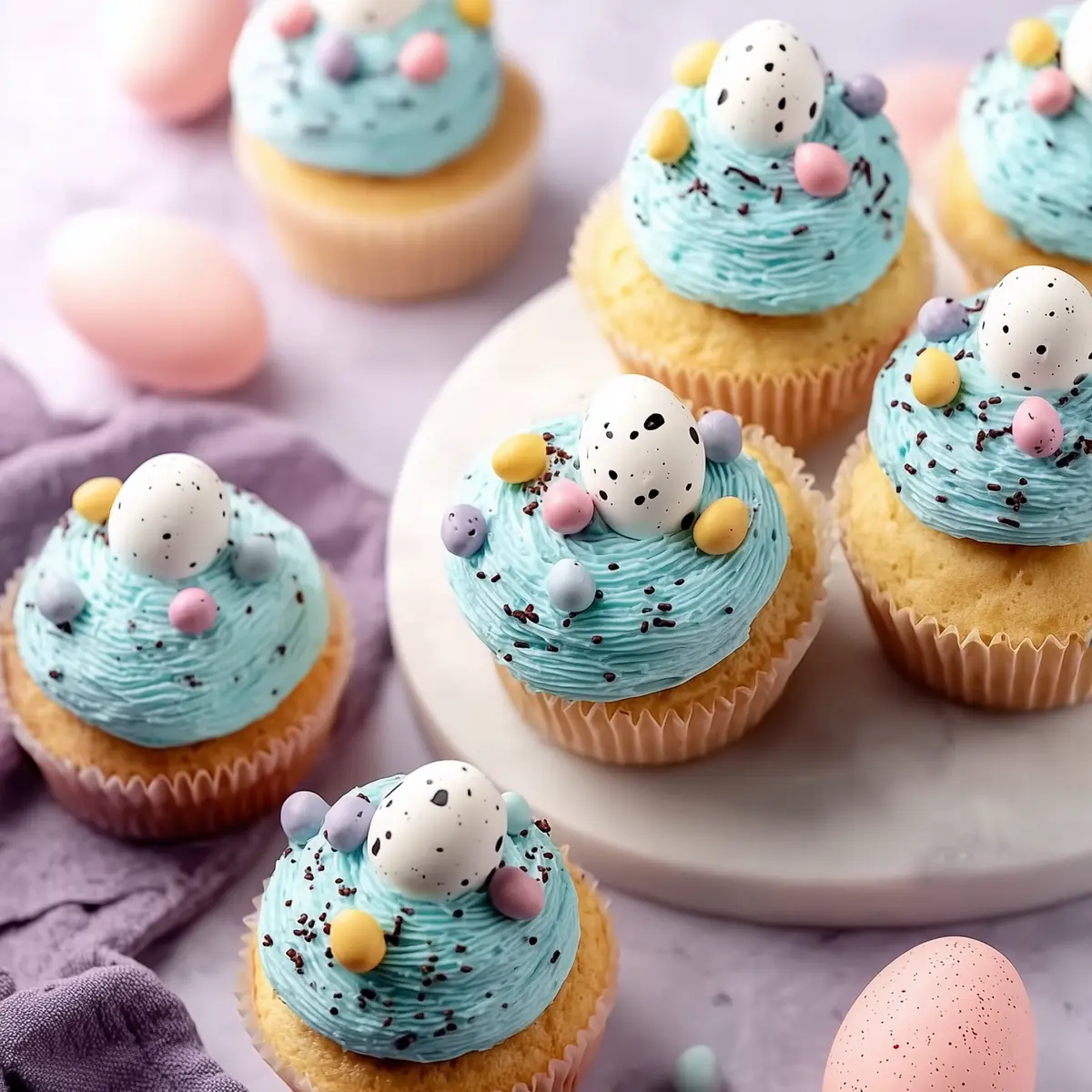
If there’s a recipe that truly captures the spirit of springtime celebration, it’s Egg Easter Cupcakes. Every year, right around the first hints of budding trees and that cool breeze that says “Easter’s almost here,” these cupcakes somehow end up on my kitchen counter—and not a crumb remains by the end of the weekend. There’s something unmistakably joyful about their pale blue buttercream, those playful robin’s egg speckles, and of course, the crown of mini chocolate eggs perched on top of every sweet dome.
What really gets me about these cupcakes isn’t just the adorable look—though they do tend to steal the show on any dessert table. It’s the balance: ultra-soft, vanilla-rich cake that’s tender but never too dense, cool buttercream kissed with vanilla, and a hint of almond that adds warmth without overpowering. Add the crackle of chocolate eggs on top and a dusting of cocoa “freckles,” and you’ve got something that feels special yet approachable. Perfect for Easter brunch, kids’ parties, spring potlucks, or just a fun baking afternoon when you want to bring a little extra happiness into your kitchen.
When Egg Easter Cupcakes Steal the Spotlight
Is there anything more inviting than a plate piled high with pastel-topped, chocolate-egg-decorated cupcakes at the center of your Easter table? Every year when I bake Egg Easter Cupcakes, it’s a guarantee that the adults hang back “just to admire” and the kids quietly hover with anticipation, ready to pounce the moment I say “go ahead.” These cupcakes don’t just look festive—they bring an energy to the table that signals togetherness, laughter, and the kind of shared joy you just can’t fake.
They’re my go-to when I want something pretty, whimsical, but with enough substance underneath all the decoration. These aren’t just for kids (although they make any egg hunt more exciting). The cake itself is indulgently soft, gently fragrant, and holds its shape under a generous swirl of robin’s egg blue frosting. Every bite reminds me that sometimes, playful desserts can feel both nostalgic and new—all at once.
The Ingredients That Set These Cupcakes Apart
- flour – forms the backbone of the cupcake, giving structure and that familiar, comforting crumb.
- Cornstarch – makes the crumb lighter and more delicate, so every bite feels plush rather than heavy.
- Baking powder & baking soda – a duo that ensures a gentle, even rise and a soft, open texture.
- Salt – just a pinch, but crucial for balancing sweetness and deepening the vanilla flavor.
- Salted butter – used in both batter and frosting for richness and a hit of salt that keeps everything from being overly sugary.
- Granulated sugar – sweetens the cake without masking vanilla or almond notes.
- Egg whites – keep the cupcakes tender and give them that lift and pale color, perfect for pastel frosting.
- Vanilla extract (or vanilla bean paste) – the main flavor—using paste gives beautiful specks, but extract works like a charm.
- Almond extract (optional) – a drop will give a warmth and depth that makes people ask, “what’s that extra flavor?”
- Sour cream – brings moisture and bounce, keeping each cupcake fresh and never dry.
- Whole milk – for that touch of fat and richness, binding everything together.
- Powdered sugar – whips up into a lush, thick frosting that holds swirls and pretty peaks.
- Heavy cream – softens the frosting, making it impossibly smooth and easy to pipe.
- Coconut extract (optional) – just a whisper, especially if you love a tropical, springy note.
- Blue gel food coloring – delivers that perfect robin’s egg blue without watering down the buttercream.
- Cocoa powder & vanilla extract (for speckling) – a quick mix that gets flicked across the frosting for that authentic “eggshell” look.
- Cadbury mini eggs – the final, colorful crowning touch; any pastel candy eggs would work if you like.
See the recipe card below for the full list of ingredients and measurements.
Building Flavor Layer by Layer
The process of making Egg Easter Cupcakes is part ritual, part creative burst—don’t rush it, and you’ll get treats with flavor and texture worth lingering over.
First off, always start with everything at room temperature—especially the butter, eggs, and sour cream—which makes all the difference in getting a silky-smooth batter. I like to line my muffin pan early, so I’m ready as soon as the mixing’s finished.
Begin with whisking the dry ingredients together. That means your flour, cornstarch, leaveners, and salt get to mingle and distribute, which helps you avoid little pockets of baking powder or uneven rising.
While those rest, beat the butter and sugar until they’re almost fluffy—a couple minutes, and the mixture will get paler and look like soft, sweet clouds. Next comes the egg whites. Pour them in slowly so the batter becomes light without breaking. Add the vanilla and a dash of almond extract if you want that elusive bakery aroma.
Here’s where you’ll alternate the dry mixture and the milk. Pour a bit of the flour blend, then a splash of milk, then repeat. It’s a dance, not a dump—resist the urge to speed through, and stop mixing as soon as that last streak of flour disappears.
The sour cream is up next—fold it in gently. The goal is soft and cloud-like, never overworked. Overmixing leads to dense cupcakes, so a delicate hand is key.
Spoon the batter into the prepared tins, filling each liner about two-thirds. You want enough space left for those pretty little domes to form during baking.
The cupcakes need just enough time in a moderate oven—watch for the edges to turn just golden and a toothpick to come out with a few soft crumbs.
Once baked, cool them fully before it’s frosting time.
When it comes to the buttercream, whip the butter until glossy and spreadable. Gradually add the powdered sugar so it doesn’t puff up in your face. The heavy cream, vanilla, coconut extract, and a pinch of salt all go in for depth and smoothness. Drizzle in your blue coloring slowly so you can control the shade—a soft, robin’s egg blue is what you’re after.
Pipe or dollop the frosting on top of the cupcakes until you have satiny, sky-blue mounds. For the speckles (the most fun part), stir together a bit of cocoa and vanilla extract, grab a clean brush, and gently flick it over the frosting. If a few drops land on your countertop, that’s the sign of a real, hands-on baker.
Crown each frosted cupcake with three mini chocolate eggs to finish. They’ll nestle in like they were always meant to be there.
Robin Egg Texture Meets Buttercream Bliss
Sink your teeth into one of these cupcakes and you get it: a delicate outer shell that gives way to soft-as-a-pillow cake underneath, wrapped in cool, silky buttercream with that satiny mouthfeel you only get from well-whipped sugar and butter.
There’s something special about the way the chocolate eggs contrast—a crisp shell with creamy vanilla, a hint of coconut or almond if you went that route. The gentle blue hue and spotted cocoa flecks play with your eyes before your taste buds get to join in.
It’s not just about looks, though. The cupcake crumb is melt-in-your-mouth tender, never dry or crumbly. The frosting is rich enough for adults to appreciate, yet not so sweet it overwhelms little ones. And every bite delivers a little burst of springtime, bringing back the simple excitement of hunting for Easter eggs (even if you’re long past the age for egg hunts).
Details That Turn Good Cupcakes into Great Ones
A few tweaks and tricks can take your Egg Easter Cupcakes from good to “wow, how did you make these?”
- Make sure all dairy (butter, sour cream, milk) is room temperature before mixing—this is what gives that unbeatable cupcake texture.
- Don’t overmix after adding the flour and especially after the sour cream; gentle folding means lighter cupcakes.
- For the best robin’s egg blue, start with just a little gel food coloring. You can always add more, but you can’t take it out.
- The cocoa speckles work best if your mixture is runny—not gloppy—or the specks won’t flick evenly. Use a small, clean pastry brush or even a new toothbrush for the full effect.
- Switch up the flavor extracts to match your mood: a splash of lemon or orange works nicely in spring, and coconut makes the whole batch feel like a tropical Easter getaway.
- If you don’t have Cadbury mini eggs, any pastel chocolate candies will work. Or even homemade chocolate truffles if you’re feeling ambitious!
- Make the cupcakes a day ahead and store unfrosted in an airtight container. Frost and decorate just before serving for the freshest look.
- Leftovers (if you have any) keep well covered at cool room temperature for a day or two, or chilled in the fridge for a few more days. The frosting helps keep them moist.
Serving These Cupcakes for an Easter Feast or a Quiet Treat
Egg Easter Cupcakes are a showstopper at any big spring gathering, but don’t underestimate their power at a cozy family brunch or even tucked into a lunchbox for a midweek pick-me-up.
Arrange them on a cake stand in a circle, piling them high so the colors and chocolate eggs draw every eye. They make a fabulous finish for an Easter ham dinner or a pretty addition to a spring dessert buffet with lemon tarts and strawberry shortcakes.
For a playful touch, set out extra mini eggs in bowls alongside so guests (especially little ones) can “hunt” for more to top their cupcakes. Hot coffee, cold milk, or a light sparkling wine all play well alongside—whatever fits the moment. And don’t forget, these cupcakes taste just as good in pajamas, shared with a close friend over a late-morning cup of tea.
FAQs about Egg Easter Cupcakes
Can I make Egg Easter Cupcakes ahead of time?
Yes, you can bake the cupcakes a day in advance and keep them covered at room temperature or in the fridge if your kitchen runs warm. For ultimate freshness, frost and decorate them on the day you plan to serve. The unfrosted cakes also freeze well.
How do I store leftover Egg Easter Cupcakes?
Keep any frosted cupcakes in an airtight container at cool room temperature for up to two days. If your kitchen is warm, store them in the refrigerator and let them come back to room temp before serving to make sure the frosting is creamy.
Can I substitute the mini chocolate eggs with something else?
Definitely! Any pastel chocolate candies will work, or you could use jelly beans, malted milk eggs, or even chocolate chips for a different look and flavor. Just make sure whichever topping you choose is safe for all your guests if allergies are a concern.
Is it possible to freeze these cupcakes?
Yes—freeze the unfrosted cupcakes in a single layer until solid, then transfer to a sealed container. When ready to serve, thaw at room temperature and frost fresh. Freezing after frosting isn’t recommended, as the buttercream and decorative eggs can become soggy or lose their texture.
When spring rolls in and you’re itching for something a little joyful, a batch of Egg Easter Cupcakes hits all the right notes—colorful, fluffy, just sweet enough, and with a playful little crunch from those chocolate eggs. They’re the kind of dessert that makes a gathering feel like a celebration, even if it’s just you sneaking one with your afternoon coffee. So set out those liners, unleash your inner artist with a flick of cocoa, and let each bite remind you why simple traditions stick in our memory long after the last cupcake has vanished.
More Delicious Recipes
- Strawberry Limeade Mocktail: This refreshing drink is a perfect springtime treat to pair with your delightful Easter cupcakes.
- Irish Cream Poke Cake: A decadent cake that adds a festive flair, great for celebrations and gatherings like Easter.
- Breakfast Crunchwrap Delight: This tasty breakfast option can be a delightful start to your Easter brunch before diving into desserts like the Egg Easter Cupcakes.
Egg Easter Cupcakes Easy Beautiful Easter Treat
Equipment
- Muffin pan
Ingredients
Ingredients
- 1 1/2 cups all-purpose flour
- 1/4 cup cornstarch
- 1 teaspoon baking powder
- 1/4 teaspoon baking soda
- 1/4 teaspoon salt
- 1/2 cup salted butter, room temperature
- 1 cup granulated sugar
- 3 egg whites egg whites, room temperature
- 3 teaspoons vanilla extract or vanilla bean paste
- 1/2 teaspoon almond extract, optional
- 1/2 cup sour cream, room temperature
- 1/2 cup whole milk, room temperature
- 1 cup salted butter, room temperature (for frosting)
- 4 cups powdered sugar
- 2 to 3 tablespoons heavy cream
- 2 teaspoons vanilla extract
- 1/2 teaspoon coconut extract, optional
- Pinch salt
- Blue gel food coloring
- 1 tablespoon cocoa powder
- 3 to 4 teaspoons vanilla extract (for speckling)
- Cadbury mini eggs for topping
Instructions
Instructions
- Preheat oven to 350°F and line a muffin pan for 14 cupcakes.
- Whisk together flour, cornstarch, baking powder, baking soda, and salt.
- Beat butter and sugar until light and fluffy.
- Mix in egg whites, vanilla extract, and almond extract if using.
- Alternate adding dry ingredients and milk, mixing just until combined.
- Fold in sour cream gently without overmixing.
- Fill cupcake liners two-thirds full.
- Bake 18 to 22 minutes or until a toothpick inserted in the center comes out clean.
- Cool cupcakes completely.
- Beat butter for frosting until creamy.
- Gradually add powdered sugar.
- Mix in heavy cream, vanilla extract, coconut extract if using, and salt.
- Add blue gel food coloring until you reach a pale robin’s egg shade.
- Frost completely cooled cupcakes.
- Mix cocoa powder with vanilla extract until thin.
- Flick mixture lightly over frosted cupcakes to create speckles.
- Top each cupcake with three mini chocolate eggs.