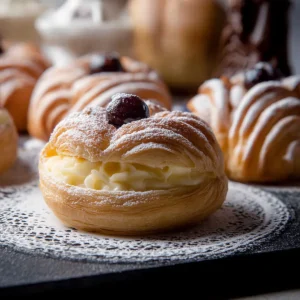
If you’ve ever been lucky enough to step into a bustling Italian bakery in March, you know exactly how magnetic the aroma of freshly made St.Joseph’s Pastries is—puffed golden shells, sweet vanilla pastry cream, just the faintest whiff of butter and sugar floating in the air. Honestly, I start craving these Zeppole di San Giuseppe as soon as it gets close to St. Joseph’s Day. They remind me of lively holiday gatherings, kids scrambling for the biggest cherry on top, and a table packed with friends and laughter.
These pastries have a way of making even an ordinary weekday feel like a small celebration. Whether you go for the baked or fried version, you’re in for a crisp shell, a cloud of creamy filling, and that signature jewel-bright amarena cherry as the literal cherry on top. There’s a certain joy in seeing everyone’s face light up when these beauties hit the table.

Why These St.Joseph’s Pastries Are Always Worth Making
There’s something about St.Joseph’s Pastries that feels celebratory, even if you’re just baking a batch for a snack at home. These are not your everyday cream puffs—they’re richer, with a heritage baked right in and a touch of nostalgia in every bite. Whether you bake or fry them, you get that delicate crunch, yielding to a silk-smooth vanilla cream.
They’re a classic for St. Joseph’s Day, but trust me, once you make zeppole like this, you’ll want them any time you need a sweet pick-me-up or an excuse to show off your pastry skills. Guests are forever amazed that you made these at home (especially once they see the traditional amarena cherry on top). Plus, nothing says “I care” quite like a tray full of homemade St.Joseph’s Pastries on the table—each one a tiny, edible celebration.
Inside the Classic St.Joseph’s Pastries: Ingredient Breakdown
Here’s what goes into truly authentic St.Joseph’s Pastries:
- flour – The backbone of your choux dough, helping it puff and get just the right crispness.
- Butter – Adds richness and flavor—don’t skimp on the quality, since it really comes through here.
- Water – Hydrates the dough, creating that signature puff when it bakes or fries.
- Eggs – Essential for binding and giving the pastry its tender, airy texture; they also put that lovely shine on the shells.
- Salt – A tiny amount, but it keeps the flavors from tasting flat.
- Whole milk – The base for your dreamy pastry cream—makes it extra smooth and velvety.
- Egg yolks – For the pastry cream, yolks give color and creaminess you won’t get from anything else.
- Sugar – Sweetens the cream and adds that subtle golden tint when dusted on top.
- Corn starch – Thickens the filling so it sits perfectly inside each shell, never runny or gloopy.
- Vanilla pod or extract – Classic and fragrant, this brings warmth and depth to the pastry cream.
- Powdered sugar – For that all-important final dusting, making each pastry look like you just brought it home from the pasticceria.
- Amarena cherries – The traditional topping; their tart syrupy punch balances out the creamy sweetness below.
- Large star tip & canvas pastry bag – These make shaping the iconic rings both easy and beautiful.
See the recipe card below for the full list of ingredients and measurements.
How to Make Italian St.Joseph’s Pastries at Home
Cooking up a batch of St.Joseph’s Pastries is a rewarding process, with each step building toward that golden, cream-filled payoff. Here’s how you can make Zeppole di San Giuseppe from scratch:
- Start the choux pastry dough. Add water, butter, and salt to a saucepan and bring it up to a gentle boil. Once the butter melts and you see bubbling, dump in the flour all at once. Stir vigorously—really put your arm into it—until the dough pulls together into a soft, elastic ball. Keep mixing for another minute or two over low heat so it dries out just a little.
- Cool and enrich with eggs. Scoop the dough into a mixer bowl. Let it cool until it’s just warm to the touch (not cold, but not hot enough to cook your eggs). Next, add your beaten eggs in small batches. Beat each addition in until it’s fully absorbed before adding more. The dough should end up glossy, silky, and thick enough to pipe but still hold its shape.
- Pipe the zeppole rings. Fill a pastry bag fitted with a large star tip, and pipe out circles (with a hole in the middle) onto parchment-lined trays. If you’re going the baked route, spread them apart—these beauties puff up in the oven. Want to fry? Pipe the circles on greased squares of parchment to make slipping them into oil simple.
- Bake or fry the dough rings. For baking, pop them into a preheated oven—don’t open that oven door at first or they’ll collapse. Lower the heat halfway through and, at the very end, crack the door open a touch so they don’t get soggy. For frying, heat a deep pan of oil to a sizzle, drop in your parchment-topped dough circles, and watch them float and puff. The parchment slips right off as they fry. Remove when they’re golden and crisp, then blot away excess oil.
- Make pastry cream. While the rings are cooling, whip up the filling. Beat your egg yolks with sugar until pale, then blend in corn starch. Warm milk and split vanilla pod (or extract) until steaming—not boiling. Slowly add this hot milk to the egg mix while whisking, then return to the pot. Gently cook, whisking all the while, until it thickens to a luscious custard. A little butter at the end (optional) makes it even silkier. Let the cream chill, placing plastic wrap directly on the surface to prevent a skin.
- Assemble the St.Joseph’s Pastries. Once the shells are cool, slice each in half. Fill with plenty of pastry cream (use the same star tip for extra flair!), sandwich the tops back on, and pipe another rosette or swirl on top. Crown each with a glistening amarena cherry and dust generously with powdered sugar.
Tiny Tweaks for Extraordinary St.Joseph’s Pastries
Even if this is your first time making St.Joseph’s Pastries, a few small shifts can take your zeppole from good to breathtaking. When working the choux dough, make sure it forms a shiny mass—if it looks dry, add an extra spoonful of beaten egg. Avoid peeking while they bake, especially early on, as the shells can deflate before they set.
If you dream of really crisp shells, baked zeppole benefit from propping the oven door open slightly at the end—this lets out steam and keeps them beautifully airy inside. For frying, get that oil hot enough for a lively bubble when a test bit of dough goes in, but not so hot that the outsides brown before the centers are done.
For the pastry cream, whisk like your life depends on it during cooking. If a few lumps sneak in, just strain the cream before chilling—no big deal. Always cover the surface with plastic wrap directly—skip this and you’ll get a chewy skin you’ll want to peel off.
Finished St.Joseph’s Pastries keep their best texture the day they’re filled, but you can bake or fry the shells ahead and fill them just before serving. If you end up with leftovers, store them in the fridge in an airtight container, but expect a bit less crunch the next day (not that anyone minds when there’s pastry cream involved).
Serving Suggestions and Creative Variations
St.Joseph’s Pastries are usually the showstopper at spring feasts, but you can easily jazz up this classic for your own table. Instead of just one amarena cherry, try a small cluster or swap in candied orange peel for a grown-up twist.
Love texture? Sprinkle chopped roasted pistachios or bittersweet chocolate shavings over the pastry cream for extra contrast. You can even pipe in a swirl of sweetened ricotta or add a dash of lemon zest to the cream for a Southern Italian touch.
Pair these pastries with a shot of strong espresso, some sweet marsala wine, or a crisp cappuccino. If you’re feeling festive, arrange them on a cake stand with fresh berries and extra amarena cherries scattered around for that over-the-top bakery vibe.
Thinking make-ahead? The shells freeze well after baking or frying—just thaw and warm slightly before filling. Fill only what you’ll serve, so every St.Joseph’s Pastry is at peak freshness and crunch.
FAQs about St.Joseph’s Pastries
Can I make St.Joseph’s Pastries ahead of time?
Absolutely! The pastry shells (either baked or fried) can be made a day or two in advance and stored unfilled in an airtight container. Fill them just before serving to keep everything crisp and fresh.
What’s the best way to store leftover St.Joseph’s Pastries?
Keep any leftover pastries in the fridge, tucked inside a container to prevent them from drying out. They’ll lose some of their crispness after a few hours, but the flavors actually meld together in a lovely way.
Are there alternatives to amarena cherries for topping?
Yes—you can use any jarred sour cherry or even maraschino cherries if amarena are hard to find. Some bakers swap in candied citrus, sliced strawberries, or even a simple dusting of extra powdered sugar.
Can I freeze St.Joseph’s Pastries?
You can freeze the unfilled pastry shells once cooled. Place them in a single layer in a freezer bag and thaw at room temperature before filling with cream. Filled pastries don’t freeze well, as the cream gets watery.
Golden, festive, and completely irresistible, St.Joseph’s Pastries bring a bit of Italian celebration to any kitchen. Whether you top them traditionally or add your own twist, each zeppola makes a sweet, beautiful reminder of holiday joy and generosity (even if it’s just a random afternoon treat). Serve with a dusting of powdered sugar, pass around some espresso, and enjoy that first creamy, cherry-topped bite—there’s nothing quite like it.
More Tasty Ideas
- Easy Homemade Bread: Making fresh bread at home pairs wonderfully with creamy pastries like St. Joseph’s Pastries.
- Tiramisu Chocolate Layer Cake: This lovely dessert celebrates Italian flavors, just like zeppole do during festive occasions.
- Cheesy Parmesan Mozzarella Bites: These savory bites are a great appetizer for any gathering that includes sweet treats like St. Joseph’s Pastries.
St.Joseph's Pastries - Zeppole di San Giuseppe

Equipment
- Large Star Tip
- Canvas Pastry Bag
Ingredients
Ingredients
- 250 grams water (about 1 cup + 1 tbsp)
- 160 grams flour (preferably bread flour, about 1 heaping cup)
- 100 grams butter (3.5 ounces)
- 230 grams eggs (about 4 large eggs)
- ½ tsp salt
- 2 cups whole milk
- 6 egg yolks
- ⅓ cup sugar (+ 3 tbsp (100 grams))
- ⅓ cup corn starch (40 grams)
- 1 vanilla pod (or 1 tbsp vanilla extract)
- 60 grams butter (2 oz (optional))
- Powdered Sugar
- Amarena Cherries
Instructions
Instructions
- In a medium stove-top pot add water, butter, and salt. Bring to a boil. Reduce the heat to low and add flour all at once. Using a wooden spoon mix energetically until the dough comes together in a smooth ball. Continue mixing and cooking on low heat for a few minutes.
- Transfer the dough into a mixer bowl. Using a dough hook beat it for a few minutes to let the dough cool. Once the dough is warm (it doesn't have to be cold, just cool enough so the eggs won't cook with the heat) start adding beaten eggs, little at a time. Add the next portion of egg mixture ONLY once the previous one has been completely incorporated.
- Transfer the dough to a pastry bag with a large star-shaped tip and start piping zeppole.
- Preheat oven to 356F/ 180C (fan off).
- Line the baking sheet with parchment paper. Pipe the dough into 3-inch in diameter circles leaving a small hole in the middle. Leave enough space between the pastries as they’ll double in size in the oven.
- Start baking in a preheated to 356 F / 180 C oven for 10 minutes. Then reduce temperature to 335F / 170C and bake for another 25-30 minutes. Don't open the oven during the first 25 minutes. During the last 5-10 minutes open the oven door ONLY for an inch and let zeppole bake for another 5-10 minutes.
- Preheat vegetable oil suitable for frying to 375F in a deep sautee pan.
- Cut out 3-inch squares of parchment paper, brush one side of the square with vegetable oil.
- Pipe the dough on each square forming a circle.
- Deep squares in hot oil a few at a time. The paper will separate from the fritters in the hot oil. Fry zeppole until lightly brown. Discard on paper towel to absorb excess oil.
- Beat egg yolks with sugar. Add corn starch. Beat everything well until you get a smooth and even lump-free mix.
- Cut the vanilla pod in half lengthwise, scrape out the seeds and add to the pot with milk. Place a pot with milk on a stove and heat until very hot, but don't bring it to a boil.
- Slowly pour the hot milk in the bowl with egg mix, mixing continuously. Pour the mixture back into the milk pot and set on medium heat.
- Whisk continuously to prevent the formation of lumps and cream sticking to the bottom of the pot. Continue whisking until the cream starts to thicken then remove immediately from the heat and vigorously beat until smooth.
- Transfer pastry cream to a deep dish (preferably placed in the freezer 1-2 hours in advance). Let the cream cool slightly by whisking it continuously, then add butter (optional).
- Once zeppole are cool, cut each in half. Fill a pastry bag with pastry cream. Pipe pastry cream on the bottom half, cover with the top and pipe another star or a swirl of pastry cream on the top.
- Decorate with cherries drained from syrup. Dust with powdered sugar before serving.