You know that moment when you’re rolling up freshly-soaked rice paper with the brightest herbs and crispest veggies, and you suddenly realize you’re really just waiting for the peanut sauce? Vietnamese Peanut Sauce for Spring Rolls isn’t just a side act—it’s the whole show. There’s something addictive about the way its salty, sweet, and slightly tangy flavors cling to a tender spring roll, transforming every bite into pure bliss. I used to think it was some mystical restaurant secret, but once I started tinkering at home, I couldn’t believe how simple (and honestly, fun) it is to whip up the real thing.
The smell alone—nutty, savory, carried by a whisper of garlic—always brings everyone to the kitchen before I even lay out the rolls. If you’ve never made this classic dip yourself, you’re in for an effortless treat. You might find that you end up double-dipping, or spooning it onto rice bowls, grilled chicken, or just, well, sneaking it from the bowl. No shame; this is one of those sauces worth savoring by the spoonful.
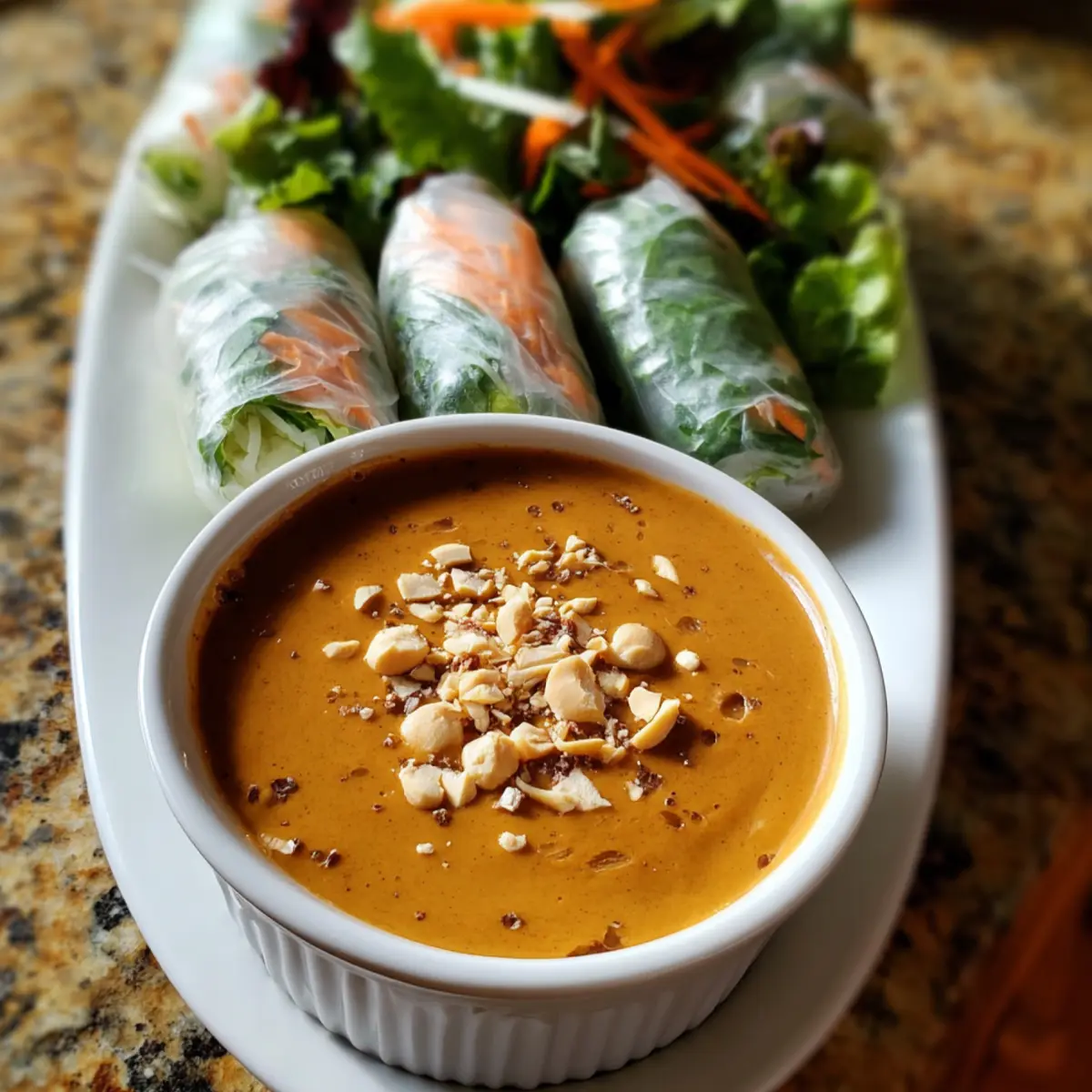
When Peanut Sauce Transforms the Spring Roll Experience
There’s a moment, every time, when the spring rolls are barely touched because everyone’s too busy loading them up with this Vietnamese Peanut Sauce. It’s creamy, eye-catchingly glossy, flecked with crushed peanuts—and it somehow channels both comfort and zing. I’ve seen so many friends and family skip the hoisin or nuoc cham in favor of this sauce, scraping the bowl clean while chatting over a platter of shrimp rolls or tofu bundles. The magic? It ties everything together, mellowing sharp herbs, brightening up cool veggies, and elevating bland rice paper into something crave-worthy. Once you try it homemade, the bottled stuff just doesn’t even register anymore.
The Ingredients That Give Vietnamese Peanut Sauce Its Appeal
Flavor here is layered, but every ingredient does its part to keep things balanced rather than overwhelming. It’s an odd little crew that just, somehow, works.
- Peanut butter – The main event that brings creaminess and roasted depth. Go for the smooth kind, but a little chunky peanut butter works too if you like tiny bits.
- soy sauce – Adds deep savoriness and salt. Tamari or coconut aminos can be swapped in to taste or if you need gluten-free.
- Rice vinegar – Brings brightness and that little snap of acidity that wakes everything up.
- Honey – Lends warmth and subtle sweetness to offset the salt and tang. Maple syrup can do the job for vegan needs or extra earthiness.
- Sesame oil – A hint of roasted aroma that floats right over the top of every bite. Don’t skip it if you love that distinct Asian kitchen scent.
- Garlic – Punches in with just enough raw fire. Minced fresh is best, but pre-chopped or a touch of garlic powder works in a pinch.
- Water – Just enough to smooth everything into a dippable, pourable consistency.
- Chopped peanuts – Sprinkled at the end for crunch, color, and that unmistakable peanut aroma as you dig in.
See the recipe card below for the full list of ingredients and measurements.
Stirring and Balancing the Sauce Right in Your Kitchen
You won’t need a stove for this peanut sauce. That’s honestly one of its charms—no simmering, no fuss, just a bowl and a sturdy spoon or fork.
Start by plopping the peanut butter into a mixing bowl, then pour in the soy sauce, rice vinegar, honey, sesame oil, and garlic. The color might look a bit wild at first—all streaky and uneven—but don’t worry. Use a fork, spatula, or even a mini whisk, and give it a good, confident mix. The glossy peanut butter resists at first, but keep stirring and soon the mixture turns smooth, thick, and a gorgeous caramel shade.
Now it’s time to loosen things up. Slowly add water, a splash at a time, stirring between each pour. The sauce will thin out, turning glossy and pourable. Stop when it moves easily but still clings to your spoon—think the consistency of a thick salad dressing or light yogurt.
Once everything’s smooth, taste it. You might want a touch more honey if the vinegar bites a little too hard, or maybe an extra drop of soy sauce for more depth. Adjust as your palate tells you. Pour into a serving bowl, top with chopped peanuts, and watch it disappear. If you have a few extra minutes, let the sauce rest—flavors mellow and blend even more beautifully after ten minutes or so.
Texture, Flavor, and That Instant Hit of Umami
Take a spring roll and drag it through this peanut sauce: it’s velvety, thick enough to coat but not so heavy that it overpowers the roll. Each bite starts with deep nuttiness, the kind that lingers pleasantly on your tongue. Underneath, there’s a savory sweep—salty, earthy, unmistakably rich from the [soy sauce](https://en.wikipedia.org/wiki/Soy_sauce)—that ties right into the gentle zing of vinegar. I love how the sweetness doesn’t blast you in the face; instead, it rounds everything out. The finish? Just enough sesame to remind you where you are, and a foundation of fresh garlic that perks up your taste buds without overwhelming anything. Those chopped peanuts on top crackle as you bite, a tiny textural surprise that makes it all the more snackable.
Tips and Twists for the Perfect Dipping Sauce
Don’t be afraid to tweak or troubleshoot—this sauce is forgiving and wants to fit your taste. If your peanut butter is especially thick (or from the fridge), let it warm to room temp for easier mixing. Prefer your dip with more kick? Add a squeeze of sriracha or a spoonful of chili garlic paste to the bowl as you whisk. Out of honey, or skipping animal products? Maple syrup or agave both work beautifully, though they each bring slightly different depth. Allergic to peanuts? Sunflower butter transforms this into a nut-free delight.
If it seems a bit salty, balance with extra honey or an extra dash of vinegar. For a thinner, drizzle-able sauce, keep adding water a teaspoon at a time. The key is tasting as you go—your palate knows best.
Leftovers store well: tuck your sauce in a sealed jar in the fridge and give it a stir before serving. It’ll thicken when cold, so loosen with just a few drops of warm water if needed. Don’t freeze peanut sauce; the texture splits, and trust me, it won’t be the silky dip you remember.
Spring Roll Dipping Sauce Moments That Matter
There’s something almost ritualistic about laying out platters of fresh spring rolls with that bowl of Vietnamese peanut sauce right in the center—it brings people together, every time. This sauce doesn’t just stop at spring rolls, either. Drizzle over rice noodle salads, slather onto grilled chicken skewers, or even use as a dressing for crisp cabbage slaws and big crunchy bowls of veggies. I’ve scooped it onto leftover rice, swiped it into lettuce cups, and—don’t judge—even dipped sliced apples when I’m feeling snacky.
For gatherings, make it ahead and keep it chilled; let it come up to room temperature for that perfect dipping consistency. Top with extra nuts or even a sprinkle of sesame seeds for a little visual flair. However you serve it, one thing holds true: this sauce disappears fast.
FAQs about Vietnamese Peanut Sauce for Spring Rolls
How long does Vietnamese peanut sauce for spring rolls keep in the fridge?
Once prepared, this peanut sauce can be stored in an airtight container in the refrigerator for up to a week. It will thicken as it chills, so give it a stir and loosen with a splash of water if needed before serving again.
Can I freeze Vietnamese peanut sauce for spring rolls?
Freezing is not recommended for this sauce. The texture tends to separate and become grainy when thawed, so it’s best made fresh or stored in the fridge for short-term use.
What can I substitute for peanut butter if I have a nut allergy?
If you need a nut-free option, sunflower seed butter is a fantastic substitute. It delivers a similar creamy consistency and rich taste, though the final flavor will be subtly different.
Can I make Vietnamese peanut sauce for spring rolls in advance for a party?
Absolutely—this sauce is a great make-ahead option for entertaining. Make it up to two days early, keep it cold, and give it a brisk stir (plus a splash of warm water if it thickens) before setting out with your rolls.
There’s something special about making Vietnamese Peanut Sauce for Spring Rolls from scratch—the way a handful of pantry staples can become so much more than the sum of their parts. Whether you’re dipping, drizzling, or just finding excuses to sneak a taste while prepping rolls, a bowl of this homemade sauce promises to turn ordinary gatherings into something memorable. Let the silky, nutty, bold richness carry your favorite rolls or snacks wherever you want to go. Give it a try, and you might just find yourself making extra spring rolls as an excuse for another dip.
More Delicious Recipes
- Bang Bang Chicken Rice Bowl: This dish features a delicious sauce that complements the brightness of fresh herbs, much like your peanut sauce does for spring rolls.
- Healthy Chicken Taco Bowls: Packed with colorful veggies and a zesty dressing, these bowls reflect the vibrant flavors you love in spring rolls and peanut sauce.
- Cheddar Garlic Herb Potato Soup: This comforting soup uses simple ingredients to create a rich flavor that can easily balance and enhance your meal, just like your delicious dipping sauce.
Vietnamese Peanut Sauce for Spring Rolls: 5 Flavorful Secrets

Equipment
- mixing bowl
Ingredients
Ingredients
- 1/2 cup peanut butter
- 1/4 cup soy sauce
- 2 tablespoons rice vinegar
- 2 tablespoons honey
- 1 tablespoon sesame oil
- 1/2 teaspoon garlic, minced
- 1/4 cup water
- 1 tablespoon chopped peanuts for garnish
Instructions
Instructions
- In a bowl, combine peanut butter, soy sauce, rice vinegar, honey, sesame oil, and garlic.
- Add water gradually to achieve desired consistency.
- Mix until smooth and well combined.
- Serve with spring rolls and garnish with chopped peanuts.