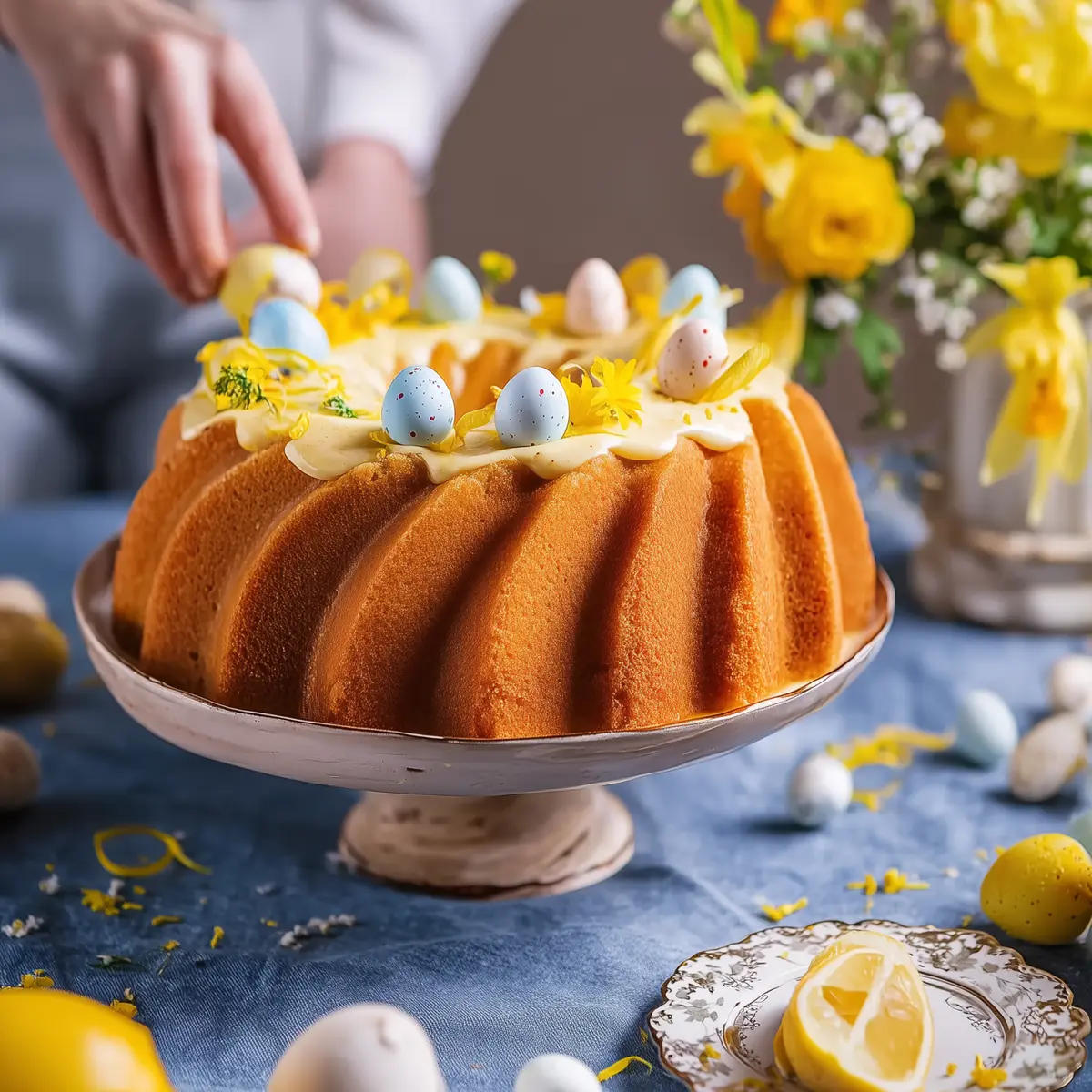
A few years back, Easter landed on a drizzly Sunday, with everyone showing up at my house in slightly damp pastel outfits, clutching flowers and way too many chocolate eggs. This Easter Lemon Bundt Cake saved the whole vibe—its bright citrus aroma pretty much erased that soggy weather. If you love desserts that taste like sunshine but look festive enough for a holiday table, this recipe is about to become your seasonal go-to.
There’s something undeniably cheerful about a cake topped with colorful chocolate eggs. This lemon bundt isn’t just pretty—it’s soft, full of tangy lemon flavor, and cleverly easy to make. When you cut a slice, the glaze drips perfectly, the crumbs stay moist, and every bite is a little promise of warm spring days (even if the weather says otherwise).
Why This Easter Lemon Bundt Cake Brings Spring to Your Table
The best desserts don’t just taste good—they capture a mood. This Easter Lemon Bundt Cake brings sunshine to your table with tangy citrus and the kind of cheerful look that makes everyone reach for a slice before dinner’s cleared.
It’s one of those recipes you’ll want up your sleeve for any spring festival or family gathering. The cake has just the right balance: vibrant and fresh from real lemons, subtly sweet, and rich enough to feel like a holiday treat without being heavy. What seals the deal is the showstopping glaze, making even a simple coffee break feel like a little party.
Bundt cakes also hold up incredibly well, so you can make it ahead and not stress about last-minute dessert drama. The crackle of glaze, the burst of chocolate eggs on top, and that gently golden crumb—it’s festive, easy, crowd-pleasing, and kind of hard not to eat for breakfast the next day.
The Easter Lemon Bundt Cake Ingredient Breakdown
- Flour: gives the cake structure and a tender crumb; use all-purpose for best results.
- Baking soda & baking powder: work together to lift the cake and keep it light.
- Salt: a pinch sharpens the lemony flavor and balances the sweetness.
- Vegetable oil: brings consistent moisture, so your bundt is never dry.
- Granulated sugar: sweetens things up and helps the cake brown just enough.
- Eggs: bind everything together and make the cake rich and fluffy.
- Vanilla paste or extract: a gentle floral note that lets the lemon pop.
- Lemon juice & zest: the heart of the flavor—fresh juice for tang, zest for aroma.
- Full-fat yogurt: ups the moisture and gives a faint tang that pairs perfectly with citrus.
- Powdered sugar: for that sweet-tart glaze on top.
- Milk: helps smooth out the glaze so it drips just right.
- Mini chocolate eggs: the playful finishing touch—choose your favorite colors and brands.
See the recipe card below for the full list of ingredients and measurements.
Ingredient Swaps and Easy Tweaks
If you want to riff on your Easter bundt cake or adapt to what’s in your fridge, it’s easy to make a few swaps. Greek yogurt works just as smoothly as regular, or you can try sour cream for an even richer texture. No vegetable oil? Any neutral oil, or even light olive oil, can stand in.
If you’re out of lemon, orange zest and juice brings a sweeter citrus profile and works beautifully. And hey—if you’re baking for someone who doesn’t eat eggs, a commercial egg replacer or a mix of mashed banana and yogurt can keep the cake moist and cohesive (though banana will slightly change the flavor). It’s also easy to switch up the mini eggs for pastel sprinkles, candied peel, or crushed pistachios if you want a nutty crunch.
Simple Steps to Easter Lemon Bundt Cake Perfection
- Start by prepping your bundt pan. If you want to avoid any drama with sticking, make a quick homemade cake release: blend a bit of shortening, oil, and flour, then brush every crevice—even nonstick pans like a little extra insurance.
- In a small bowl, whisk your dry ingredients together until everything is thoroughly mixed—this sets your cake up for a uniform, soft crumb.
- In a larger bowl, beat the oil and sugar with an electric mixer on high until the mix looks a bit creamy and pale. Lower the speed and add eggs one at a time, scraping the bowl between each. Once they’re in, fold in your vanilla, lemon juice, and zest for that fragrant, sunny kick.
- Switch your mixer to the lowest setting. Alternate adding your flour mixture and yogurt in small amounts: start and finish with the dry mix, stirring just until the last streaks vanish. Overmixing is the enemy of a tender bundt—trust that gentle folding gets the job done.
- Spoon the batter into your prepared pan, smoothing the top. A couple drops on the counter helps settle the batter into every groove of the bundt. Bake until your kitchen smells lemony-fresh and the top is golden. Let the cake cool before turning it out of the pan, then let it finish cooling on a rack (patience pays off here!).
- For the glaze, quickly whisk your powdered sugar with milk and lemon juice until smooth and glossy. Drizzle the glaze over the cooled cake so that it slides over the ridges. Sprinkle with mini chocolate eggs, extra zest, or decorate with edible flowers if you’re feeling fancy.
Pro Tips for Perfect Lemon Bundt Every Time
The magic in a showoff bundt cake usually comes down to little details and a willingness to let things cool fully. Always grease every inch of your pan—there’s no shortcut here. Letting the cake cool in the pan for a bit before turning it out makes a huge difference and prevents breakage.
Store the cooled cake covered at room temperature for a day or two, or pop it in the fridge if you want to keep it longer. The flavors mellow and deepen with time, and the texture stays surprisingly soft. If you want to add glaze ahead of time, wait until the cake is fully cool and set—otherwise the glaze will melt rather than cling.
Warming up leftovers for a few seconds in the microwave brings back that just-baked softness. If you’re making it in advance, wrap tightly and freeze without the glaze, then thaw and add the topping just before serving.
Pairings and Playful Variations for Any Occasion
This Easter bundt cake is a natural alongside an afternoon cup of tea, but it also shines on a brunch spread next to quiche or spring salads. For an ultra-festive table, serve it with bowls of fresh berries, a dollop of lightly sweetened whipped cream, or even a scoop of lemon sorbet for an extra-tart treat.
Not feeling chocolate eggs? Try shaved white chocolate or a scattering of toasted coconut for a fresh finish. This recipe also welcomes other citrus glazes—blood orange or grapefruit could give you a stunning color and a subtle twist.
You can mix up the mood, too: try making smaller bundt cakes or even sturdy cupcakes for party-ready single servings. The adaptability of this cake means it’s not just for Easter; a swap of decoration makes it work for birthdays or anytime you need a little citrusy sunshine.
FAQs about Easter Lemon Bundt Cake
Can I make Easter Lemon Bundt Cake ahead of time?
Yes, this cake is perfect for making in advance. Bake and cool the cake, then wrap it well and store at room temperature for a day or refrigerate for up to several days. Add the glaze and decorative toppings just before serving to keep it looking fresh.
How do I keep my bundt cake from sticking to the pan?
Greasing every part of your bundt pan is key for easy release. Use a thin layer of homemade cake release or a generous coating of butter and flour, making sure to reach all the detailed grooves. Let the cake cool slightly before unmolding for best results.
Can I freeze this lemon bundt cake?
Absolutely—this cake freezes beautifully. Bake and cool the cake, then wrap it tightly without glaze and freeze. Thaw at room temperature before adding the glaze and serving, and nobody will suspect it wasn’t baked the same day.
What if I don’t have mini chocolate eggs for the topping?
No problem! You can use pastel sprinkles, candied citrus peel, edible flowers, or even crushed nuts for a fun and festive finish. The cake stands on its own and handles creative decorations well.
Why You’ll Make This Easter Lemon Bundt Cake Again
Bright, tangy, and downright cheerful, this Easter Lemon Bundt Cake is so much more than a seasonal tradition—it’s a celebration in itself. With that signature lemon flavor, beautiful glaze, and playful toppings, it brings joy to both making and sharing.
This is the kind of cake people ask about long after the plates are empty. It’s easy enough for a relaxed Sunday but impressive enough for any spring gathering. Next time you need a dessert that’ll lift spirits and taste like spring, you’ll be glad this recipe’s in your lineup.
More Delicious Recipes
- Lemon Rolls: If you enjoy bright citrus flavors, these lemon rolls are a perfect sweet treat to complement your bundt cake.
- Soft Chewy Lemon Cookies: These cookies bring that same zesty lemon goodness in a delightful chewy form that’s perfect for any occasion.
- Irish Soda Bread No Yeast Bread: An easy bread recipe that pairs wonderfully with cakes, perfect for your spring gatherings.
Easter Lemon Bundt Cake Recipe (Easy Spring dessert!)

Equipment
- bundt pan
Ingredients
Ingredients
- 2 cups all-purpose flour (spooned and leveled)
- 1 teaspoon baking soda
- 1 teaspoon baking powder
- 1/2 teaspoon salt
- 3/4 cup vegetable oil
- 1 cup granulated sugar
- 3 large eggs (room temperature)
- 1 teaspoon vanilla paste (or pure vanilla extract)
- 1/4 cup lemon juice (freshly squeezed)
- 2 large lemons zest (plus more for garnish)
- 1/2 cup full-fat yogurt (room temperature)
- 1 ½ cups powdered sugar (spooned and leveled)
- 2 tablespoons milk
- 1 tablespoon lemon juice (freshly squeezed)
- 3/4 cup mini chocolate eggs
Instructions
Instructions
- Preheat oven to 350°F. While nonstick cooking spray is an option for greasing your bundt pan, I strongly recommend making homemade cake release. To do this, combine 1 tablespoon of vegetable shortening, 1 tablespoon of vegetable oil, and 1 tablespoon of flour. Then, use a pastry brush to evenly coat every crevice of your bundt pan. Set aside.
- In a separate bowl, whisk together the flour, baking soda, baking powder, and salt for about a minute.
- In a large bowl of an electric mixer, beat together the oil and sugar at high speed for a minute, then reduce to medium speed.
- Gradually add the eggs one by one, mixing after each addition. Stir in the vanilla, lemon juice, and zest.
- Switch the mixer to low speed. Add the dry ingredients to the wet ingredients, alternating with the yogurt, beginning and ending with the flour mixture. Mix until just combined.
- Pour the cake batter into the prepared bundt cake pan, tapping it gently on the counter to remove any air bubbles and fill any crevices. Bake in the center of the oven for 25-30 minutes, or until a toothpick inserted into the center comes out clean and the cake is golden brown. Let the cake cool in the pan for 15 minutes before removing it from the pan, and transferring it to a cooling rack to cool completely.
- Combine the glaze ingredients in a small bowl until smooth and free of lumps. Drizzle the glaze over the room-temperature cake and decorate it with mini eggs, lemon zest and edible flowers if desired.