I still remember the first time I saw a Japanese soufflé pancake jiggle. It was in a Tokyo café tucked behind a train station, where people waited in line for over an hour just to watch their pancakes wobble on the plate before digging in. When I got home, I couldn’t stop thinking about that impossibly airy texture. It was like eating a cloud that had somehow caramelized. Eventually, I set out to replicate them—no molds, no fancy tools, just patience and a bit of kitchen science.
If you’ve been craving something a little whimsical and a lot delicious, these Jiggly Japanese Soufflé Pancakes are the answer. Light as air, delicately sweet, and surprisingly simple once you get the hang of it, they’re a weekend breakfast that delivers restaurant drama from your stovetop.

Table of Contents
What Makes These Jiggly Japanese Soufflé Pancakes So Special?
Unlike classic pancakes that sit heavy on the plate, Jiggly Japanese Soufflé Pancakes are all lift and bounce. They’re soft, tall, and almost custard-light, thanks to a soufflé-style batter that uses whipped egg whites (meringue) to create structure and height.
These are the pancakes you serve when you want a reaction. They wobble when you move the plate, melt in your mouth after the first bite, and make ordinary mornings feel like a celebration. Whether you’re planning a brunch for friends or treating yourself to something Instagram-worthy, they’re guaranteed to impress.
Ingredients & Substitutions for Jiggly Japanese Soufflé Pancakes
You’ll only need a few staple ingredients to make these pancakes, but proportions and handling are everything.
Base Batter
- 2 large eggs, separated
- 2 tablespoons whole milk
- ½ teaspoon vanilla extract
- 1 teaspoon lemon zest (optional, but brightens flavor)
- ¼ cup (30g) all-purpose flour, sifted
- ¼ teaspoon baking powder
- 2 tablespoons granulated sugar
- ½ teaspoon white vinegar (or fresh lemon juice)
- Neutral oil (vegetable or grapeseed) for greasing the pan
Optional Toppings
- Sweetened whipped cream
- Assorted berries (strawberries, blueberries, kiwi)
- Powdered sugar
- Maple syrup
Whipped Cream (Optional)
- ½ cup cold heavy cream
- 1 tablespoon sugar
- ½ teaspoon vanilla extract
Substitutions & Tips
- Milk: Oat or soy milk works well for dairy-free versions. Avoid thin almond milk—it affects the texture.
- Flour: Cake flour gives an ultra-soft bite but may collapse more easily. Stick to AP flour unless experienced.
- Vinegar: Lemon juice or cream of tartar (⅛ tsp) can replace it.
- Sugar: Caster sugar dissolves faster in meringue, but granulated sugar works fine.
Equipment You’ll Need
Precision makes or breaks Jiggly Japanese Soufflé Pancakes, but you don’t need professional gear.
- Hand or stand mixer (for meringue)
- Rubber spatula (for gentle folding)
- Nonstick pan with a lid (or heatproof bowl to cover)
- Large spoon, cookie scoop, or piping bag with large round tip (Wilton 2A works well)
- Infrared thermometer (optional but helpful—target 285°F to 320°F / 140°C to 160°C)
- Mixing bowls, whisk, paper towel for oil
Step-by-Step Instructions
Follow these steps closely and you’ll master the rise, jiggle, and signature soufflé softness.
Step 1: Separate and Prep the Base
Separate the egg whites and yolks carefully. No yolk should enter the whites—fat will ruin your meringue.
In the bowl with yolks, add milk, vanilla, and lemon zest. Whisk until combined. Sift in the flour and baking powder, then whisk until smooth. Set aside.
Step 2: Whip the Meringue
Add vinegar to the egg whites. Using a mixer, beat on medium until frothy, then gradually sprinkle in sugar.
Once all sugar is added, increase speed to medium-high. Beat to stiff peaks—meringue should be glossy and stand upright when the whisk is lifted. Don’t overbeat (it will look grainy) or underbeat (it won’t hold shape).
Step 3: Fold with Care
Add one-third of the meringue into the yolk batter. Fold gently but thoroughly. It’s okay to be slightly aggressive with this portion.
Now, add the remaining meringue and fold carefully, scooping from bottom to top, rotating the bowl. Fold just until no white streaks remain. Overmixing will deflate the air you just built in.
Step 4: Portion and Cook
Preheat your nonstick pan over low heat (aim for 285–320°F / 140–160°C). Lightly grease and wipe off excess oil.
Spoon or pipe 2–3 mounds of batter into the pan. The taller the mound, the more dramatic the rise. Cover with lid or heatproof bowl.
Cook for 7–8 minutes, until the bottoms are golden and batter looks slightly set. Flip gently with a spatula—don’t press. Cover again and cook for another 5–6 minutes.
Step 5: Serve Immediately
Transfer to plate carefully. Top with whipped cream, berries, or syrup. They’ll begin to deflate slowly—this is normal. Serve while still warm and fluffy.
Why This Recipe Works
The magic of Jiggly Japanese Soufflé Pancakes is structural. Airy meringue gives volume, while the flour provides just enough gluten to hold it together.
The vinegar or lemon juice stabilizes the meringue by lowering pH, allowing the proteins to trap more air. Folding gently protects that trapped air. Cooking low and slow ensures the center sets without burning the outside.
This isn’t just a pancake—it’s a controlled rise.
Pro Tips & Variations
Technique Enhancers
- Use cold eggs: They separate more cleanly.
- Wipe your bowls clean: Even a speck of fat prevents stiff peaks.
- Pipe with control: A piping bag gives the best height.
- Flip like a soufflé: Don’t “drop and flip”—use a rolling motion to turn gently.
Flavor Upgrades
- Matcha Pancakes: Add 1 tsp matcha to the dry mix.
- Chocolate Soufflé Pancakes: Mix 1 tbsp cocoa powder with flour.
- Citrus Brightness: Add orange zest and drizzle with honey.
Make-Ahead, Storage & Freezing
Batter: Not suitable for storage. Meringue collapses quickly—always cook immediately after folding.
Cooked pancakes: Best served fresh. You can store in an airtight container in the fridge for up to 2 days. Expect deflation, but the taste remains pleasant.
Freezing: Freeze on a baking sheet, then transfer to a sealed bag. Reheat in a covered skillet or microwave for 30 seconds under a damp towel.
Serving Suggestions & Pairings
Jiggly Japanese Soufflé Pancakes shine with simple pairings.
- Fruit: Macerated berries, sliced banana, or poached pear
- Sauces: Lemon curd, vanilla crème, matcha drizzle
- Drinks: Green tea, iced matcha latte, or a dry cold brew
- Proteins: For savory contrast, pair with soft-scrambled eggs or thinly sliced prosciutto
Dietary Notes & Allergen Considerations
- Vegetarian: Yes
- Gluten-Free: Try 1-to-1 GF baking flour, but structure may suffer
- Dairy-Free: Use soy or oat milk; swap coconut cream for whipped topping
- Nut-Free: No nuts in base recipe
- Vegan: Not suitable; egg structure is essential
Troubleshooting & Common Mistakes
- Flat pancakes? Likely due to overmixed batter or under-whipped meringue.
- Eggy flavor? Undercooked centers or not enough vanilla/zest.
- Burnt bottoms, raw middle? Heat too high—use low consistent temp.
- Won’t hold shape? Fat in egg whites, or whites weren’t whipped to stiff peaks.
- Sticky to flip? Grease pan lightly and wipe clean for even cooking.
Nutritional Information (per serving, estimated)
- Serving Size: 1 batch (2–3 pancakes)
- Calories: ~375
- Sugar: ~26g
- Sodium: ~155mg
- Fat: ~11g
- Saturated Fat: ~3.7g
- Unsaturated Fat: ~6g
- Trans Fat: 0g
- Carbohydrates: ~51g
- Fiber: ~1g
- Protein: ~17g
- Cholesterol: ~375mg
FAQs
What makes Jiggly Japanese Soufflé Pancakes different from regular pancakes?
They use meringue to rise, not baking powder alone. That gives them their signature height and bounce.
Can I make Jiggly Japanese Soufflé Pancakes ahead of time?
The batter should be used immediately. Cooked pancakes can be stored for 2 days but will lose some fluff.
Why did my pancakes deflate?
A little deflation is natural. Significant collapse usually comes from overfolding or undercooking.
Can I double this recipe?
Yes—but mix the batter in two batches to preserve structure.
Can I use cake flour instead of all-purpose?
Yes, but reduce the liquid slightly. Expect a softer, more delicate result.
Conclusion
There’s something joyful about making Jiggly Japanese Soufflé Pancakes. They require care but not complexity. Once you understand the method, they become one of those recipes you return to when you want something playful, light, and a little magical.
So give it a try. Invite the wobble into your weekend. Let the batter rise, flip gently, and savor the kind of breakfast that makes staying in feel like dining out. Then, share your pancakes—and maybe your story—with someone who needs a little lift.
More Tasty Ideas
- Fluffy Sweet Potato Pancakes: These warm and pillowy pancakes bring a cozy twist to your brunch lineup, offering a naturally sweet flavor that pairs beautifully with the light texture of jiggly soufflé pancakes. Great for fall mornings or when you’re craving something both hearty and delicate.
- French Toast Casserole: With its custard-soaked bread and soft, airy center, this recipe shares the same comforting, cloudlike texture as Japanese soufflé pancakes. Perfect for a crowd-pleasing brunch with a golden, caramelized top.
- Coffee Cake Muffins: Light, tender, and topped with a sweet crumble, these muffins deliver a similar melt-in-your-mouth experience to jiggly pancakes—ideal for pairing with tea or your morning latte.
Jiggly Japanese Soufflé Pancakes
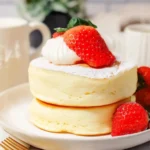
Jiggly Japanese Soufflé Pancakes are ultra-light, fluffy pancakes made using a meringue-based batter that creates a soft, cloud-like texture. They’re lightly sweet, delicately flavored with vanilla and lemon zest, and perfect for an elegant brunch or special breakfast.
- Prep Time: 7 minutes
- Cook Time: 13 minutes
- Total Time: 20 minutes
- Yield: 1 serving (2 to 3 pancakes)
- Category: Breakfast
- Method: Stovetop
- Cuisine: Japanese
- Diet: Vegetarian
Ingredients
- 2 large eggs, separated
- 2 tablespoons whole milk
- 1/2 teaspoon vanilla extract
- 1 teaspoon lemon zest (optional)
- 1/4 cup all-purpose flour (fluffed, spooned, and leveled)
- 1/4 teaspoon baking powder
- 1/2 teaspoon white vinegar or lemon juice
- 2 tablespoons granulated sugar
- Neutral oil (for greasing pan)
- 1/2 cup cold heavy cream (optional for topping)
- 1 tablespoon granulated sugar (for whipped cream)
- 1/2 teaspoon vanilla extract (for whipped cream)
- Assorted berries (optional topping)
- Powdered sugar (optional topping)
- Maple syrup (optional topping)
Instructions
- Separate the egg whites and egg yolks into separate mixing bowls, ensuring no yolk gets into the whites.
- To the yolks, add milk, vanilla extract, and lemon zest. Whisk until well combined.
- Sift in the flour and baking powder into the yolk mixture and whisk until smooth with no dry flour visible. Set aside.
- Add vinegar or lemon juice to the egg whites. Beat on medium speed until frothy, then slowly add sugar while beating.
- Increase mixer speed to medium-high and beat until stiff peaks form.
- Fold 1/3 of the meringue into the yolk batter and mix gently until mostly combined.
- Fold in the remaining meringue carefully until no white streaks remain. Do not overmix.
- Preheat a nonstick pan over low heat (285°F–320°F) and lightly grease with neutral oil. Wipe off excess oil with a paper towel.
- Using a large spoon, cookie scoop, or piping bag, portion the batter into 2–3 mounds on the pan, keeping them tall.
- Cover the pan with a lid or heatproof bowl and cook for 8 minutes until the bottom is golden brown.
- Flip pancakes gently using a rolling motion. Cover again and cook for another 6 minutes until fully cooked through.
- Serve immediately with sweetened whipped cream, fruits, powdered sugar, or maple syrup.
- For whipped cream: beat cold heavy cream with sugar and vanilla until firm peaks form. Refrigerate until ready to use.
Notes
- Use a piping bag for taller, more uniform pancakes.
- Do not overfold the meringue or batter will deflate.
- Stiff peaks are essential for proper rise—check by lifting whisk and seeing if meringue stands up firmly.
- Cook low and slow to avoid burning the outside before the inside sets.
- Electric stovetops provide more even heat than gas.