There’s something about peppermint and chocolate that feels like the holidays. Growing up, I remember the first time someone gave me a glossy tin filled with bark. It looked like something out of a gourmet shop—shards of chocolate swirled with white, speckled with crushed peppermint. I took one bite, and the salty-sweet snap instantly made it my favorite holiday treat. Years later, I started making my own salted peppermint bark not just for the taste, but for the joy of gifting something handmade that looks beautiful, tastes incredible, and takes less than 30 minutes of hands-on time. This version isn’t just easy—it solves the biggest problem with homemade bark: separating layers. Here’s how you can make your own stunning, gift-worthy salted peppermint bark at home.

Table of Contents
Recipe Overview & Why You’ll Love It
Salted peppermint bark is a layered chocolate confection that combines rich cocoa with creamy white chocolate, finished with crunchy peppermint candy and flaky sea salt. It’s festive, foolproof, and wildly crowd-pleasing.
You’ll love this salted peppermint bark because it doesn’t just taste amazing—it looks polished enough to pass as store-bought. It requires no candy thermometer, no baking, and uses common pantry ingredients. Whether you’re preparing for a cookie swap, holiday movie night, or filling up goodie bags, this bark makes a big batch and holds beautifully. Unlike store versions, you can tweak every layer to suit your taste—sweeter, darker, saltier, or with added crunch.
Ingredients & Substitutions
Salted peppermint bark is built from just five core ingredients. Each one contributes to the texture, flavor, or structure, so quality matters.
Chocolate Base
- 24 oz (680 g) light cocoa candy melts
Substitute: high-quality semi-sweet or dark chocolate chips, or almond bark
Tip: Avoid waxy generic brands—look for chocolate that melts smoothly and sets firmly.
White Chocolate Layer
- 20 oz (567 g) white almond bark or white chocolate melting wafers
Substitute: white chocolate chips, provided they melt smoothly - 1 tsp oil-based peppermint extract
Important: Do not use alcohol-based extract—this can seize the chocolate. Peppermint oil is safe for chocolate work.
Toppings
- 3 oz (85 g) crushed peppermint candies or candy canes
Tip: Place in a zip-top bag and crush with a rolling pin for even shards. - 1½ tsp flaky sea salt
Substitution: Coarse sea salt ground with a mill set to large flakes.
These measurements make approximately one large sheet pan (10–12 servings), but you can easily halve or double the recipe while keeping the layer ratio consistent.
Equipment You’ll Need
You don’t need specialty tools, just a few basics.
- Double boiler or microwave-safe bowls
- Measuring cups and spoons
- Parchment or wax paper
- Rimmed baking sheet
- Offset spatula or silicone scraper for spreading
- Sharp chef’s knife for clean cutting
Optional but helpful: a candy thermometer (if tempering), a salt grinder for customizing flake size.
Step-by-Step Instructions
Salted peppermint bark is all about timing and temperature. Follow these steps closely, and you’ll get perfect results every time.
Step 1 – Prep Your Pan
Line a rimmed sheet pan with parchment or wax paper. This ensures the chocolate releases easily once set. Set up your toppings (crushed peppermint and sea salt) so they’re ready to go.
Step 2 – Melt the Chocolate Base
Place 24 oz light cocoa candy melts in a microwave-safe bowl. Heat in 30-second bursts, stirring between each, until fully melted and glossy (about 90 seconds total). Alternatively, melt over a double boiler on medium-low heat, stirring continuously.
Once smooth, pour onto the lined baking sheet. Use a spatula to spread evenly into a rectangle about 9×13 inches. Let it sit at room temperature for 3–5 minutes—it should begin to set but remain slightly tacky. This partial set is key to preventing the white chocolate from separating later.
Step 3 – Add the White Chocolate Layer
In a clean bowl, melt 20 oz white almond bark using the same microwave method or a double boiler. Once melted, stir in 1 tsp oil-based peppermint extract.
Carefully pour the white chocolate over the base. Gently spread with a spatula, staying within the same rectangle shape.
Step 4 – Top and Set
Immediately sprinkle 3 oz crushed peppermint evenly over the top. Follow with 1½ tsp sea salt flakes, focusing on even distribution.
Allow the bark to set at room temperature for at least 30 minutes. Do not refrigerate if possible—cold can cause chocolate to bloom (white streaks).
Step 5 – Cut Into Pieces
Once fully firm, use a sharp knife to cut into squares or angular shards. For clean cuts, wipe the blade between slices.

Why This Recipe Works
This salted peppermint bark delivers on flavor and presentation because of how it’s built.
- Partial setting of the chocolate base ensures strong adhesion between layers, preventing separation.
- Peppermint oil (not extract) blends smoothly into melted chocolate without causing it to seize.
- Sea salt flakes add bright contrast and visual appeal while amplifying the sweetness of the chocolate.
- Room temp cooling preserves a glossy finish and keeps the bark snappy, not brittle.
Other recipes often skip these steps and end up with chalky texture or cracked layers. This method avoids those common pitfalls.
Pro Tips & Variations
Want to customize your salted peppermint bark or make it even more eye-catching? Try these upgrades.
- Dark chocolate base: For a more intense flavor, swap light cocoa melts with dark chocolate chips.
- Swirl effect: Drop spoonfuls of white chocolate onto the dark layer and swirl with a toothpick instead of fully covering it.
- Add crunch: Sprinkle crushed pretzels, toffee bits, or roasted nuts for extra texture.
- Scale for gifts: Double the recipe and divide into tins or cellophane bags with ribbon.
- Holiday sparkle: Use edible glitter or snowflake sprinkles for a festive touch.
Make-Ahead, Storage & Freezing
Salted peppermint bark is made for make-ahead gifting and lasts longer than most holiday desserts.
- Room Temperature: Store in an airtight container in a cool, dry spot for up to 3 weeks.
- Refrigerator: Extend freshness to 4 weeks, but moisture can cause streaks or color bleed.
- Freezer: Freeze for up to 3 months. Separate layers with wax paper and use airtight packaging. Thaw at room temperature before serving.
To preserve appearance, avoid stacking pieces too tightly or exposing them to humidity.
Serving Suggestions & Pairings
There’s more than one way to serve salted peppermint bark.
- Add it to a holiday cookie platter for a color and flavor contrast.
- Serve alongside hot cocoa, mochas, or peppermint tea.
- Break into smaller shards and sprinkle over ice cream.
- Wrap in decorative bags or boxes for DIY edible gifts.
- Use shards as garnish for cupcakes, cakes, or trifles.
It pairs especially well with rich dairy drinks or dark-roast coffee.
Dietary Notes & Allergen Considerations
This salted peppermint bark can be adapted to suit several dietary preferences.
- Gluten-Free: Yes. All ingredients are naturally gluten-free.
- Vegetarian: Yes.
- Dairy-Free: Not by default. Use dairy-free chocolate and white chocolate alternatives if needed.
- Nut-Free: Typically safe, but double-check labels for cross-contamination.
Always verify ingredient sourcing if gifting to someone with allergies.
Troubleshooting & Common Mistakes
Here are the most common issues people face with salted peppermint bark—and how to fix them.
- Chocolate layers separate: The base layer was too firm when adding white chocolate. Add the second layer while the first is still slightly tacky.
- Chocolate seized: Peppermint extract wasn’t oil-based. Always use oil-based extracts when working with chocolate.
- Uneven texture: Chocolate wasn’t fully melted or cooled too quickly. Stir continuously while melting and let set slowly at room temp.
- Sticky surface or sweating: Caused by refrigeration or high humidity. Store in a dry, cool spot.
Nutritional Information (per 1 oz serving – estimate)
- Serving Size: 1 oz (28 g)
- Calories: ~150
- Sugar: ~17 g
- Sodium: ~95 mg
- Fat: ~9 g
- Saturated Fat: ~6 g
- Unsaturated Fat: ~2.5 g
- Trans Fat: 0 g
- Carbohydrates: ~18 g
- Fiber: ~1 g
- Protein: ~1.5 g
- Cholesterol: ~2 mg
Values will vary slightly depending on brand of chocolate used.
FAQs
Why does my salted peppermint bark separate when I cut it?
Layer separation usually happens when the dark chocolate base is fully set before the white layer goes on. To prevent this, spread the white chocolate while the bottom is still soft but not runny.
Can I make salted peppermint bark without peppermint extract?
Yes, though the extract adds depth. The crushed peppermint alone gives it enough flavor for a subtler version.
How long does salted peppermint bark last?
Stored properly at room temp, it lasts up to three weeks. Refrigerated or frozen, it keeps even longer with proper wrapping.
Can I make salted peppermint bark vegan?
Yes. Use dairy-free chocolate chips and white chocolate made with cocoa butter, and ensure your peppermint candies are gelatin-free.
What’s the best way to crush peppermint?
Put unwrapped candies in a sealed zip-top bag and gently pound with a rolling pin or meat mallet. Avoid over-pulverizing into powder.
Conclusion
Salted peppermint bark is more than just a holiday treat—it’s a tradition you can shape with your own hands. The combination of creamy chocolate, crisp peppermint, and delicate sea salt creates an addictive contrast that’s perfect for gifting, sharing, or savoring solo with a cup of something warm.
Try it once, and it might just become part of your yearly holiday rhythm. Add your own flair, make it with kids, or package it with love. However you share it, this salted peppermint bark is a recipe worth repeating.
More Delicious Recipes
- Peppermint Oreo Truffle Balls: These festive, no-bake treats deliver the same minty-chocolate flavor profile as salted peppermint bark, with a rich, creamy center wrapped in a smooth chocolate coating. Perfect for holiday gifting or party platters.
- Crock Pot Christmas Crack: A salty-sweet candy classic made in the slow cooker, this recipe features layers of chocolate, nuts, and toffee-like crunch. It’s simple, addictive, and a perfect holiday companion to peppermint bark.
- Oreo Cookie Balls: With a similar no-bake ease and a chocolate-dipped finish, these bite-sized confections make a wonderful addition to your festive sweets lineup, especially when served alongside peppermint bark on dessert trays.
salted peppermint bark
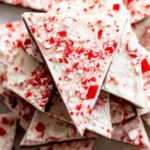
Salted Peppermint Bark is a festive, no-bake holiday treat featuring layers of rich chocolate and creamy white chocolate topped with crushed peppermint candy and sea salt flakes. It’s easy to make, visually stunning, and perfect for gifting or parties.
- Prep Time: 10 minutes
- Cook Time: 5 minutes
- Total Time: 15 minutes
- Yield: 10–12 servings
- Category: Dessert
- Method: No-Bake
- Cuisine: American
- Diet: Vegetarian
Ingredients
- 24 oz light cocoa candy melts (or chocolate chips)
- 20 oz white almond bark (or white chocolate chips or melting wafers)
- 1 tsp peppermint extract (oil-based only)
- 3 oz crushed peppermint candy or candy canes
- 1½ tsp sea salt flakes
Instructions
- Line a cookie sheet with parchment or wax paper.
- Melt 24 oz light cocoa candy melts in a double boiler or microwave in 30-second increments, stirring until smooth.
- Pour melted chocolate onto the prepared sheet and spread evenly. Let it partially set at room temperature for about 5 minutes.
- Melt 20 oz white almond bark in a clean bowl using the same method. Stir in 1 tsp peppermint extract.
- Pour and spread the white chocolate layer over the partially set base.
- Immediately sprinkle 3 oz crushed peppermint and 1½ tsp sea salt flakes over the top.
- Allow the bark to set at room temperature for at least 30 minutes.
- Cut into pieces with a sharp knife once fully set.
Notes
- Use oil-based peppermint extract to prevent chocolate from seizing.
- Partially setting the base before adding the top layer prevents separation.
- Store in an airtight container in a cool place for up to 3 weeks.
- Use a salt grinder on coarse sea salt if flakes aren’t available.