There’s something quietly magical about baking bread from scratch. I still remember the first time I pulled these two golden loaves of Amish White Bread from my oven — warm, fragrant, and softly cracking as they cooled. I’d been chasing a “forever bread” recipe that didn’t require eggs or milk but still delivered softness, sweetness, and structure. This one delivered — no gimmicks, no bread machine, just pantry basics and a proven method that works every time.
If you’ve ever had a loaf turn out too dense, too flat, or just not worth the effort, this recipe is about to restore your faith. Whether you’re brand new to yeast breads or looking to simplify your weekly baking routine, Amish White Bread is the soft, sweet, no-fail staple you’ll come back to again and again.
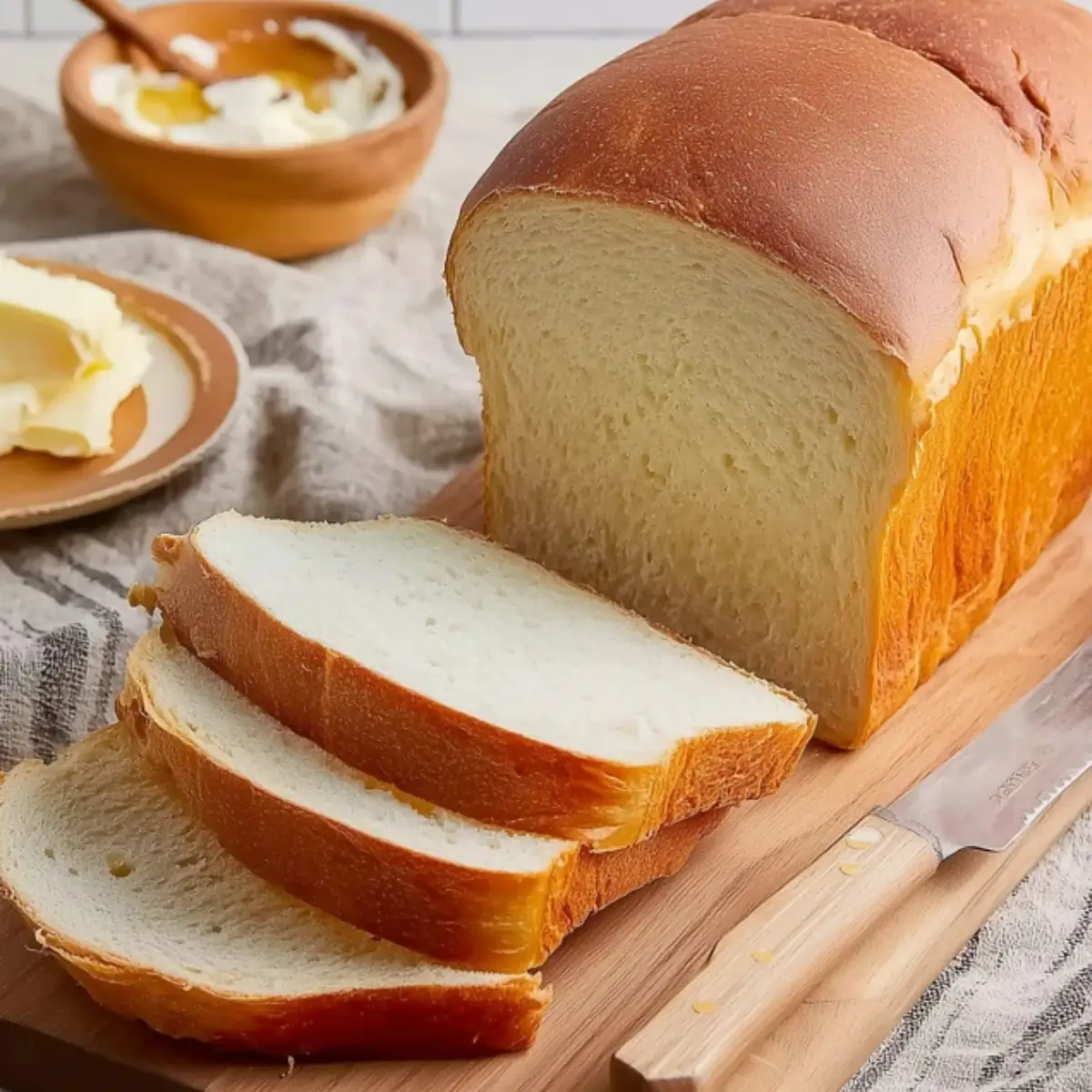
Table of Contents
Recipe Overview & Why You’ll Love It
This Amish White Bread is everything homemade bread should be: lightly sweet, pillowy soft inside, and perfectly golden on the outside. It’s a true classic — the kind of bread that turns toast into a treat and sandwiches into something special.
You’ll love the way this bread:
- Rises like a dream (thanks to a higher yeast-to-sugar ratio)
- Slices cleanly, making it ideal for sandwiches and toast
- Stays soft for days thanks to a splash of oil (no dairy needed!)
- Yields two generous loaves, so there’s always one to freeze or share
Unlike more rustic or crusty loaves, Amish White Bread leans into comfort: soft, structured, and slightly sweet. It’s versatile enough for PB&J or cinnamon toast — or anything in between.
Ingredients & Substitutions
To make this Amish White Bread, you only need a handful of pantry staples. The ingredients are simple, but they’re carefully balanced for a soft rise and tender crumb.
Wet Ingredients
- 2 cups warm water (110°F / 45°C) – warm enough to activate yeast, not hot enough to kill it
- ¼ cup vegetable oil – adds moisture and softness without adding weight
Dry Ingredients
- ⅔ cup white sugar – gives the bread its signature mild sweetness and feeds the yeast
- 1½ tablespoons active dry yeast – plenty to ensure a strong, consistent rise
- 1½ teaspoons salt – balances the sweetness and enhances flavor
- 6 cups bread flour – high-protein flour ensures strength and structure
Smart Substitutions
- Oil: Melted butter works for a slightly richer flavor. Avocado oil or light olive oil are fine too.
- Sugar: Try ½ cup honey for a deeper, floral sweetness, or ⅓ cup maple syrup for a subtle earthy note.
- Flour: All-purpose flour works in a pinch. Expect a slightly denser loaf. Or sub up to 2 cups with whole wheat for a heartier version.
- Yeast: You can use instant yeast — just use 1 tablespoon and skip the proofing step.
Budget tip: Buying yeast in jars (and storing it in the freezer) can save money and extend shelf life.
Equipment You’ll Need
You don’t need fancy tools to make Amish White Bread, just a few basics:
- Large mixing bowl (or stand mixer with dough hook)
- Measuring cups and spoons
- 9×5-inch loaf pans (x2)
- Dough scraper or sturdy spatula
- Kitchen towel or plastic wrap
- Thermometer (helpful for checking water temperature, but optional)
No stand mixer? No problem — this dough is easy to mix and knead by hand.
Step-by-Step Instructions
This Amish White Bread recipe breaks down into five simple stages. Take your time with each — and trust the process. The results are worth it.
Step 1 – Proof the Yeast
In a large bowl, dissolve ⅔ cup sugar into 2 cups warm water (110°F / 45°C). Sprinkle 1½ tablespoons active dry yeast over the top and let it sit for 5–10 minutes, until a creamy, bubbly foam forms.
Sensory check: You should see bubbles and smell that warm, yeasty aroma — a good sign the yeast is active.
Step 2 – Mix and Knead
Add ¼ cup oil and 1½ teaspoons salt to the yeast mixture. Stir to combine. Add 6 cups bread flour, one cup at a time, mixing between additions.
Turn the dough onto a floured surface and knead for 8–10 minutes, until the dough is smooth, soft, and slightly tacky.
Sensory check: Well-kneaded dough springs back when poked and feels elastic but not sticky.
Step 3 – First Rise
Place the dough in a lightly oiled bowl. Turn it once to coat. Cover with a damp cloth or plastic wrap and let it rise in a warm spot for about 1 hour, until doubled in size.
Tip: A microwave with the light on or a cold oven with a bowl of warm water underneath creates a cozy proofing spot.
Step 4 – Shape and Second Rise
Punch the dough down gently and knead for a minute. Divide evenly and shape into two loaves. Place each into a greased 9×5-inch loaf pan.
Let the loaves rise again for 30 minutes, or until the dough has crowned about 1 inch above the rim of each pan.
Step 5 – Bake
Preheat your oven to 350°F (175°C) while the loaves finish their second rise.
Bake for 30 minutes, until the tops are golden and the loaves sound hollow when tapped on the bottom.
Tip: For a softer crust, brush with melted butter right out of the oven.
Cool on a wire rack before slicing — if you can wait!
Why This Recipe Works
There’s real method to the magic behind this Amish White Bread. Here’s why it works so reliably:
- High yeast + sugar ratio gives the dough a strong, predictable rise.
- Oil keeps the crumb tender and moist, even without dairy.
- Bread flour adds gluten strength, which helps the loaf rise taller and hold its shape.
- Two rises allow flavor and structure to develop gradually.
Common bread-making mistakes this recipe avoids:
- Skipping proofing → flat or weak rise
- Cold water → inactive yeast
- Too much flour → dry, stiff dough
Pro Tips & Variations
- Add-ins: Fold in cinnamon-sugar, raisins, or cheese before shaping the loaves.
- Make dinner rolls: Divide into 12–16 balls, place in a greased 9×13 dish, and bake at 350°F for 20–25 minutes.
- Larger loaves: Use 8×4-inch pans for taller slices.
- Scaling: Halve for one loaf, or double to make four — just use a very large bowl and watch your rise times.
Make-Ahead, Storage & Freezing
- Storage (room temp): Wrap tightly; keeps 3–4 days.
- Freezing: Slice, wrap well, and freeze up to 2 months. Reheat straight from frozen in toaster or oven.
- Dough storage: You can refrigerate the shaped loaves overnight before the second rise — let them come to room temp and rise fully before baking.
Serving Suggestions & Pairings
This Amish White Bread is endlessly versatile. Serve it:
- Toasted with butter and jam
- With hearty soups and stews (try tomato, lentil, or chili)
- As sandwich bread (turkey, egg salad, or grilled cheese)
- French toast with maple syrup and berries
- Bread pudding or strata
For gatherings, slice and serve on a board with cheeses, dips, or compound butters.
Dietary Notes & Allergen Considerations
- Vegetarian: Yes
- Vegan: Yes (if sugar is bone-char free)
- Dairy-Free: Yes
- Nut-Free: Yes
- Gluten-Free: No — requires major substitutions and testing
Troubleshooting & Common Mistakes
- Dough too sticky? → Add flour 1 tbsp at a time while kneading
- Flat loaves? → Yeast may be expired, or water was too hot/cold
- Dense crumb? → Not kneaded enough, or not given full rise time
- Tough crust? → Overbaked or baked without steam (cover loosely with foil for last 10 mins if needed)
Nutritional Information (per slice, estimated)
- Serving Size: 1 slice (1/16 of recipe)
- Calories: ~160
- Sugar: ~5g
- Sodium: ~120mg
- Fat: ~3g
- Saturated Fat: ~0.5g
- Unsaturated Fat: ~2.5g
- Trans Fat: 0g
- Carbohydrates: ~28g
- Fiber: ~1g
- Protein: ~3g
- Cholesterol: 0mg
(Estimates are based on average ingredients. For exact values, use a nutrition calculator with your specific brands.)
FAQs
How do I know when Amish White Bread is fully baked?
The tops should be golden and the loaves should sound hollow when tapped. For extra precision, check that the internal temperature reaches 190°F (88°C).
Can I make Amish White Bread with whole wheat flour?
Yes — start by replacing up to 2 cups of the bread flour. The texture will be slightly denser, and you may need an extra splash of water.
How long does Amish White Bread stay fresh?
About 3–4 days at room temperature when wrapped well. For longer storage, freeze it after cooling completely.
What’s the best way to reheat frozen Amish White Bread?
Toast slices straight from frozen, or reheat a whole loaf (wrapped in foil) at 300°F (150°C) for 10–15 minutes.
Can I double this Amish White Bread recipe?
Absolutely. You’ll get four loaves — just make sure to use a large enough bowl and let each rise properly.
Conclusion
If you’ve ever struggled with homemade bread — gummy middles, uneven rises, crusts too hard or soft — this Amish White Bread is the recipe that finally gets it right. It’s approachable, reliable, and forgiving, whether it’s your first time baking with yeast or your fiftieth.
Keep one loaf for yourself and gift the other — or freeze it for later. However you enjoy it, this bread has a way of making even the simplest meal feel like home. Ready to make your kitchen smell amazing? It’s time to bake.
More Tasty Ideas
- Easy Homemade White Bread Recipe: This recipe delivers soft and fluffy loaves with a classic flavor and simple ingredients. Ideal for beginners and perfect as an everyday staple, it pairs beautifully with soups or makes a standout sandwich.
- Cranberry Eggnog Bread: A rich, festive twist on traditional sweet bread, combining warm holiday spices, tart cranberries, and creamy eggnog. It’s a cozy loaf perfect for winter mornings or gifting.
- Amish Apple Fritter Bread: This moist, cinnamon-swirled loaf features chunks of fresh apple and a sweet glaze. A cousin in style to Amish White Bread, it’s a delightful treat for breakfast or dessert.
This No-Fail Amish White Bread Rises Every Time (And Makes Two Gorgeous Loaves)

A soft, sweet, and fluffy homemade bread recipe that yields two golden loaves. This no-fail Amish White Bread is perfect for toast, sandwiches, or gifting.
- Prep Time: 75 minutes
- Cook Time: 30 minutes
- Total Time: 105 minutes
- Yield: 2 loaves
- Category: Bread
- Method: Baking
- Cuisine: Amish
- Diet: Vegetarian
Ingredients
- 2 cups warm water (110°F / 45°C)
- 2/3 cup white sugar
- 1 1/2 tablespoons active dry yeast
- 1/4 cup vegetable oil
- 1 1/2 teaspoons salt
- 6 cups bread flour
Instructions
- In a large bowl, dissolve 2/3 cup sugar in 2 cups warm water.
- Stir in 1 1/2 tablespoons active dry yeast and let proof for 10 minutes until foamy.
- Add 1/4 cup vegetable oil and 1 1/2 teaspoons salt; mix well.
- Gradually mix in 6 cups bread flour, one cup at a time.
- Turn dough onto a lightly floured surface and knead for 10 minutes until smooth and elastic.
- Place dough in a well-oiled bowl, turning to coat. Cover and let rise for 60 minutes until doubled in size.
- Punch down dough, knead briefly, and divide in half.
- Shape each half into a loaf and place into two greased 9×5-inch loaf pans.
- Let rise for 30 minutes until dough rises 1 inch above the pan rims.
- Bake in a preheated 350°F (175°C) oven for 30 minutes until golden brown.
- Remove from pans and cool on wire racks before slicing.
Notes
- For a richer flavor, substitute sugar with 1/2 cup honey or 1/3 cup maple syrup.
- You can use all-purpose flour, but loaves may be slightly denser.
- Brushing the tops with butter after baking creates a softer crust.
- Freeze sliced bread in airtight bags for up to 2 months.