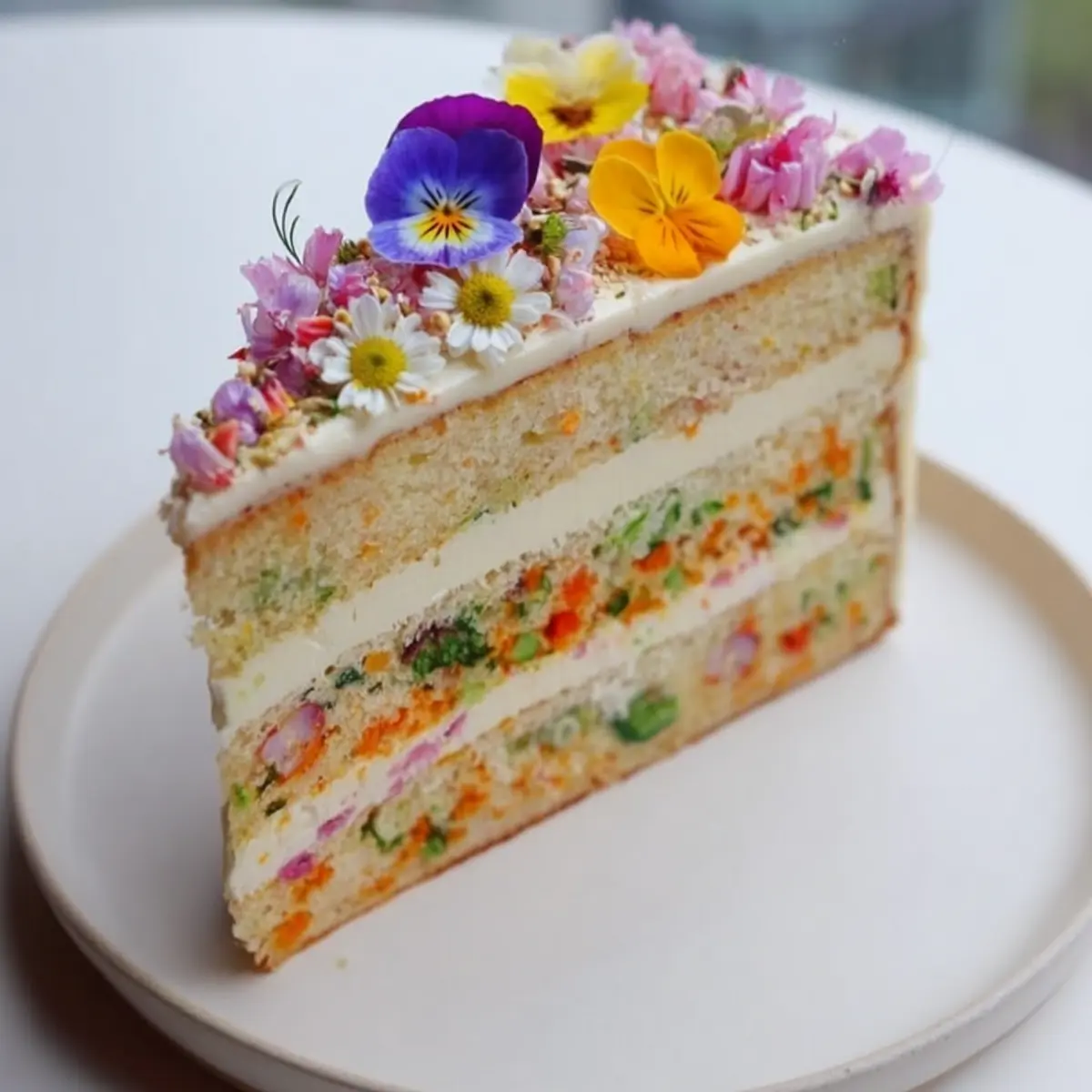
The first thing you’ll notice as this cake cools on your counter is the sweet mingling scent of butter and vanilla, punctuated by something distinctly fresh and grassy—the presence of real edible flowers. That’s always the moment I know spring has truly arrived in my kitchen. Spring Flower Cake isn’t just a dessert; it’s an invitation to slow down and celebrate the season right on your plate. Each forkful is impossibly soft, delicate, and fragrant, with just the right touch of floral charm—like a garden party in every bite. Whether you’re baking for a birthday, Mother’s Day, or just want to taste spring itself, this cake brings brightness and joy to any table.
What Makes This Spring Flower Cake So Special
There’s something magical about a cake that captures the best of spring—soft, moist layers, creamy frosting, and real edible flowers pressed right onto the top. Every slice of Spring Flower Cake is cheerful and showstopping, adding a riot of color to the dessert table. The flavor is classic and comforting, with subtle floral notes that flirt with your taste buds without overpowering the simple, buttery vanilla crumb. I love serving this cake for special occasions, but truth be told, it’s become my go-to for those sunny weekends when I need a little pick-me-up or want to surprise friends with something unforgettable.
It’s a cake that looks as if it took all day—yet, it’s straightforward enough for a weekday treat. There’s a rustic elegance to it, especially when you don’t fuss too much about arranging the flowers perfectly. And that first bite? Soft, aromatic, barely sweet, with a fresh finish you can only get from garden-grown flowers and a perfectly whipped buttercream.
The Ingredients That Make This Cake Shine
- Flour – forms the base of the cake, giving it that light, tender structure. All-purpose works best, but cake flour can lend an even softer crumb.
- Sugar – adds sweetness and helps create those golden, crisped edges as the cake bakes.
- Unsalted butter – brings moisture and a rich dairy flavor to every mouthful; you can swap for a quality plant-based butter if needed.
- Milk – keeps the crumb delicate and supple. Whole milk works beautifully, but any milk you have around will do in a pinch.
- Eggs – provide lift and richness, making each bite fluffy rather than dense.
- Baking powder – ensures a gentle rise and that classic softness you want in a spring cake.
- Vanilla extract – weaves sweet, mellow warmth through the cake, supporting the fresh floral notes.
- Edible flowers – the real star here; they bring subtle herbaceous flavors and vibrant color. Choose unsprayed blossoms like violets, pansies, nasturtiums, or rose petals.
- Buttercream frosting – smooths everything together and helps those flowers stay put on top. Use your favorite homemade or store-bought frosting.
See the recipe card below for the full list of ingredients and measurements.
Bringing This Spring Flower Cake Together Step by Step
Baking this Spring Flower Cake is a celebration in itself, and you don’t need fancy equipment or pro decorating skills to get it looking beautiful.
- Start by preheating your oven and prepping your cake pans. Grease the pans and dust them lightly with flour for easy release after baking.
- In a large bowl, cream your butter with the sugar until it’s pale and fluffy. This step builds the foundation for a light crumb—don’t rush it!
- Beat in the eggs one by one, making sure they’re fully incorporated before moving on. At this point, the mixture becomes thick and glossy, with a golden color.
- Stir in the milk and vanilla. The batter should loosen into a smooth, silky consistency.
- In a separate bowl, combine your flour and baking powder, then gently fold them into the wet mixture. A few lumps are fine; overmixing will toughen the cake.
- Divide the batter evenly between your prepared pans. Give each one a gentle tap on the counter to smooth out any air bubbles.
- Bake until the tops are lightly golden and a toothpick emerges clean. Your kitchen will smell like a classic bakery—the hardest part is waiting for the cakes to cool.
- Once baked, let the cakes cool in their pans for a few minutes before turning out onto wire racks. Fully cooling is key so your buttercream doesn’t melt.
- When ready, spread a generous layer of buttercream on one cake and stack the second layer on top. Coat the entire cake with the remaining frosting, smoothing or swirling as you wish.
- Gently press edible flowers all over the top and sides. Don’t worry about symmetry—there’s beauty in a bit of wildness, just like in a real spring garden.
Nailing the Light and Fluffy Texture Every Time
A Spring Flower Cake should feel like biting into a soft cloud—light but satisfying, with just enough structure to hold up those jeweled blossoms. Getting there is all about a few simple habits: allow your butter to soften ahead of time for easy creaming, and beat it well with the sugar so you’re aerating the base. When working the eggs into the batter, let each one combine fully before adding the next. This helps everything emulsify smoothly, leading to that delicate crumb.
Perhaps the most important trick? Be gentle when folding in the flour and baking powder. Overmixing at this stage can make the finished cake rubbery. Just combine until you no longer see dry streaks, then stop—trusting a few lumps will work themselves out during baking. And always bake just until a tester comes out clean; a minute or two longer can make the difference between plush and parched.
Serving Ideas, Variations, and Storing Your Spring Flower Cake
What I love about this Spring Flower Cake is how effortlessly it dresses up any table, from brunch gatherings to evening dinners under the stars. Serve it as is, or pair with a scoop of vanilla gelato or softly whipped cream if you want to really lean into the seasonal vibe. It’s dreamy alongside citrusy tea or a glass of sparkling wine.
To mix things up, you can swap the flowers for whatever’s blooming—try lavender, chamomile, or even slivers of candied lemon peel for extra flavor. The buttercream frosting is a blank canvas; add a hint of lemon zest or a dash of rosewater to match the mood of your blossoms.
Have leftovers? The cake keeps well at cool room temperature under a cake dome for a day or two, or in the fridge for up to four days—just bring it to room temp before serving for best flavor. Freezing works, too: simply wrap unfrosted cake layers tightly before storing for up to two months. Decorate with flowers after thawing and frosting for the prettiest results.
FAQs about Spring Flower Cake
Can I use any type of edible flower for this cake?
Most unsprayed, edible flowers work well on Spring Flower Cake. Safe choices include pansies, violets, nasturtiums, and rose petals. Always double-check that your flowers are food-safe and avoid anything treated with chemicals.
What’s the best way to store leftover Spring Flower Cake?
Keep your cake covered at room temperature for up to two days, or refrigerate for up to four days if your kitchen is warm. For longer storage, you can freeze the undecorated cake layers and add flowers after thawing and frosting.
Can I make Spring Flower Cake in advance?
Absolutely! You can bake the layers a day or two ahead and keep them well-wrapped. Frost and decorate with edible flowers right before serving for the freshest look and texture.
Is there a dairy-free version of this cake?
Yes, you can substitute plant-based milk and vegan butter for the dairy ingredients and use a non-dairy buttercream frosting. Just be sure your substitutes are unsalted and high quality for the best flavor and crumb.
What’s the easiest way to get the flowers to stick to the frosting?
The flowers will stick best if you press them gently onto freshly spread, still-soft buttercream. Avoid letting the frosting crust over before decorating, and work with one section at a time for the most secure placement.
The first slice always feels like you’re cutting into spring itself—vanilla warmth, a whiff of fresh petals, and that irresistible, tender bite. Whether you’re treating yourself or sharing with a full table, this Spring Flower Cake has a way of making any moment bloom into something lovely. Pour your favorite tea, invite a friend over, and let the season shine in every crumb.
More Delicious Recipes
- Strawberry Limeade Mocktail: This refreshing drink pairs wonderfully with spring desserts like the Spring Flower Cake.
- Melt in Your Mouth Croissant Bake: A delightful breakfast treat that channels the same light and fluffy textures you love in the cake.
- Cheesy Ranch Potatoes and Smoked Sausage: A savory counterpart that complements the sweet, floral notes of the Spring Flower Cake beautifully.

spring flower cake: 7 Secrets to a Stunning Celebration

Equipment
- 9-inch round cake pans
Ingredients
Ingredients
- 2 cups all-purpose flour
- 1.5 cups sugar
- 0.5 cups unsalted butter
- 1 cup milk
- 3 eggs
- 2 teaspoons baking powder
- 1 teaspoon vanilla extract
- 0.5 cups edible flowers
- 1 cup buttercream frosting
Instructions
Instructions
- Preheat oven to 350°F (175°C).
- Grease and flour two 9-inch round cake pans.
- In a bowl, cream butter and sugar together.
- Add eggs one at a time, mixing well.
- Stir in milk and vanilla extract.
- Combine flour and baking powder, then add to the mixture.
- Pour batter into pans.
- Bake for 25-30 minutes or until a toothpick comes out clean.
- Cool cakes on wire racks.
- Frost with buttercream and decorate with edible flowers.